

- This event has passed.
Indian Culture Evening in Haapsalu
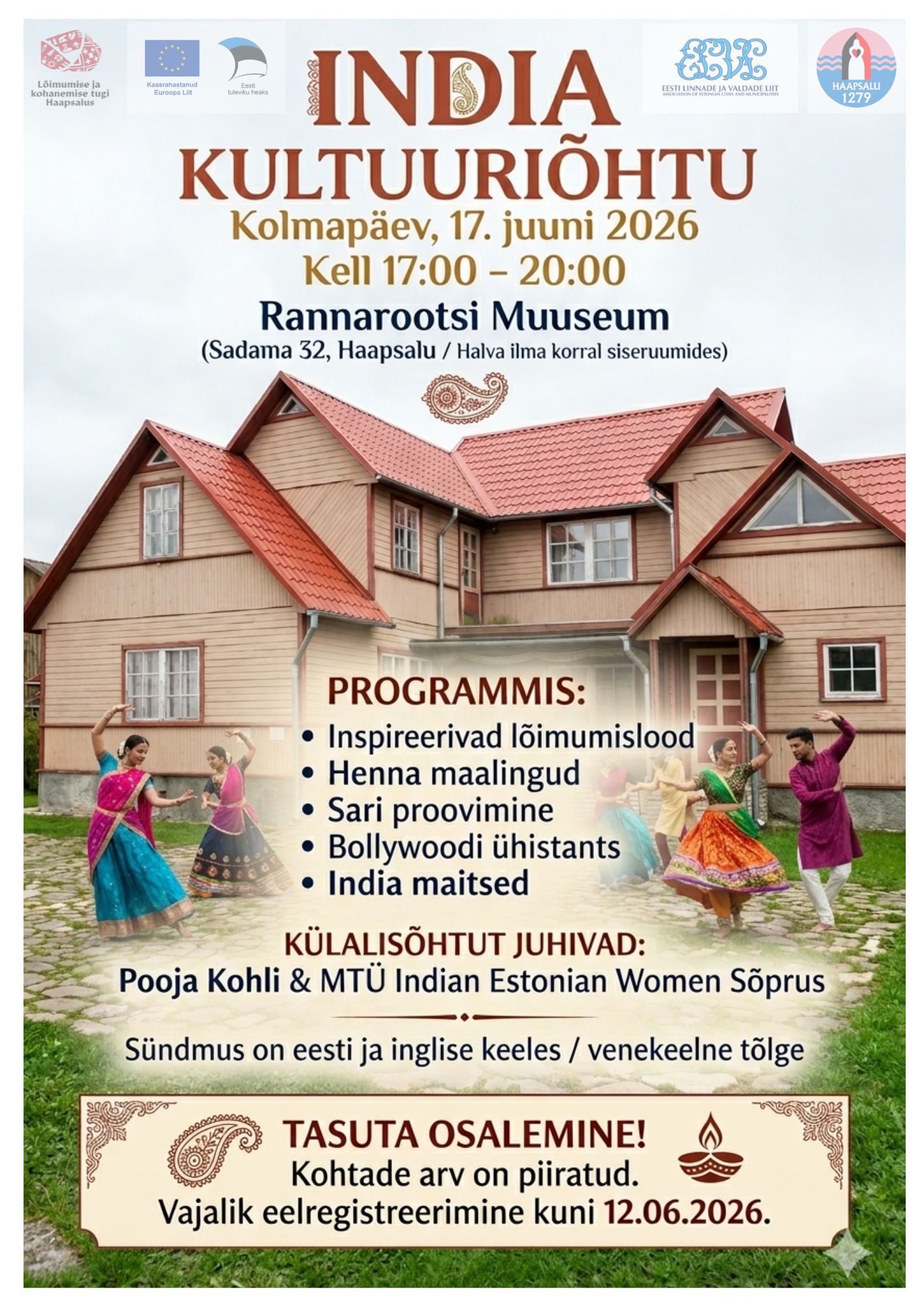
Newcomers in Haapsalu Meet Indian Culture, Traditions and Inspiring Integration Stories Indian Culture Evening invites participants to discover new perspectives, make meaningful connections and experience India’s vibrant cultural heritage.
Bridges between cultures are built through direct experience and dialogue. As part of the integration project, a special and inclusive event, “Indian Culture Evening,” will take place on Wednesday, June 17.
We welcome our project’s target group (new immigrants aged 18 and older, people from diverse linguistic and cultural backgrounds, and returnees) to the Rannarootsi Museum. Participants can draw inspiration from stories of successful adaptation and intercultural cooperation.
This is a practical and engaging evening aimed at supporting social networking among people with a migration background who have arrived in Haapsalu.
We will be joined by the NGO Indian Estonian Women Sõprus, led by its founder Pooja Kohli. In addition to India’s rich cultural heritage, they will share their personal experiences of adapting to Estonia, building a community, and contributing to local society.
The event provides a safe environment for creating new connections through shared activities.
Participants can try on a traditional Indian sari, experience the art of henna, learn Bollywood dance steps and enjoy authentic Indian flavours.
It is a place to break the ice, build bridges between people of different migration backgrounds. It also helps participants build new social connections in Haapsalu.
Time and Location
- Time: 17 June 2026 (Wednesday), 17:00 – 20:00
- Location: Rannarootsi Museum, Sadama 32, Haapsalu
- Language: Estonian and English, with Russian translation available
- In case of bad weather, the event will take place indoors.
Registration
Participation is free of charge, but the number of places is limited. Pre-registration is required!
Registration is open until 12 June 2026.
Email: julia.gurjeva@haapsalulv.ee
Phone: +372 5929 6377
✔️ The Indian Culture Evening has taken place.
See the photos and read more about an evening that brought the colourful traditions, flavours and stories of India to Haapsalu.
Project activities are supported through integration and adaptation support measures.