Jorge
Originally from Gran Canaria, Jorge left behind years in the world of professional football and began a quieter life in Haapsalu. In Estonia, he found a new job, love, and the chance to write again.
Interview by: Svea Stamberg & Tetiana Khimich
Story by: Tetiana Khimich
Estonian translation: Marina Karpištšenko
Design and technical implementation: Marina Karpištšenko
If Jorge ever wrote the story of his own life, you wouldn’t read it first. You would hear it.
A symphony of football chants echoing from stadium stands, the sharp whistle of a referee, the roar of crowds celebrating a victory.
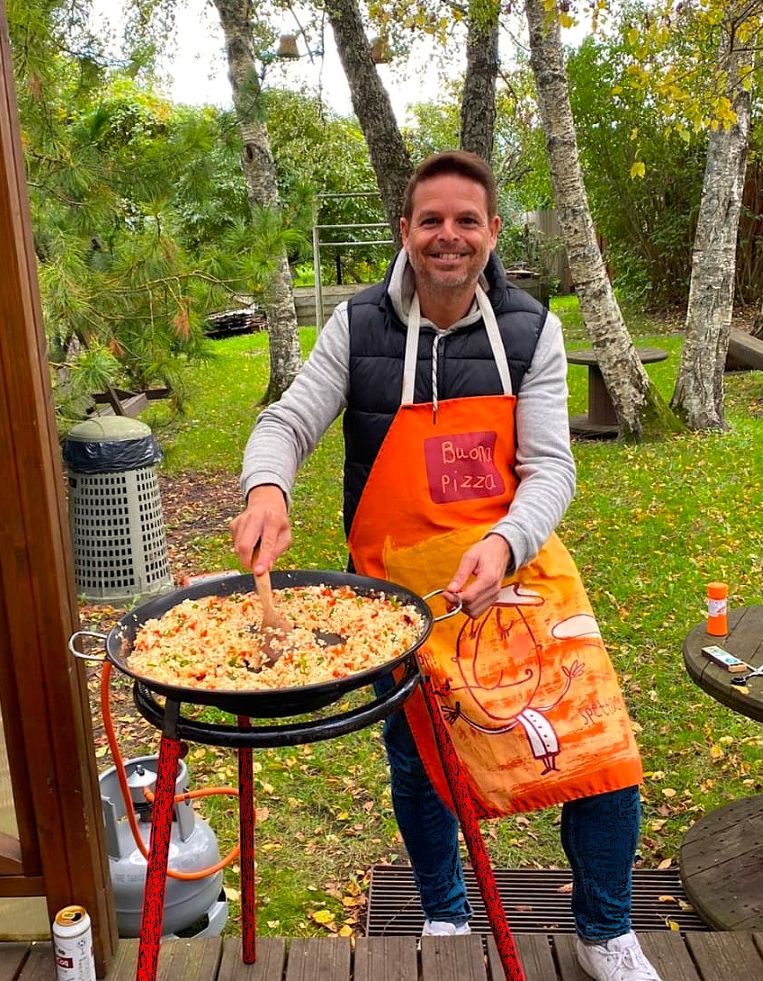
It would carry the elegance of a Mendelssohn wedding march, a reminder of the love chapter that once shaped his life, and the passion of flamenco guitar, the hum of lively conversations and the crackling fire beneath a paella pan brought from Spain to Estonia.
It would sound like waves reaching the shore, the endless chorus of birds announcing the arrival of spring, and the quiet rhythm of healthy joints moving again after careful rehabilitation.
Like the melodic “Tere hommikust” and “Head aega” floating through the streets of Haapsalu.
It would taste like salty Baltic herring in a salad with beetroot ( “Kasukas”, “Rosolje”), like the dense, dark rye bread of Estonia, with its slightly sour taste and deep, malty flavour, like the bitter olive oil poured over simple ingredients, like a glass of Spanish wine shared with good company or the first cup of coffee of a peaceful morning.
If he had the soul of a painter instead of a novelist, his story would stretch across an enormous, vivid, richly coloured canvas, composed of smooth, confident brushstrokes in almost every shade of the rainbow.
Tracing decades of travel, football stadiums, second chances, roads taken without fear and of believing that some of life’s greatest discoveries happen around a shared table.
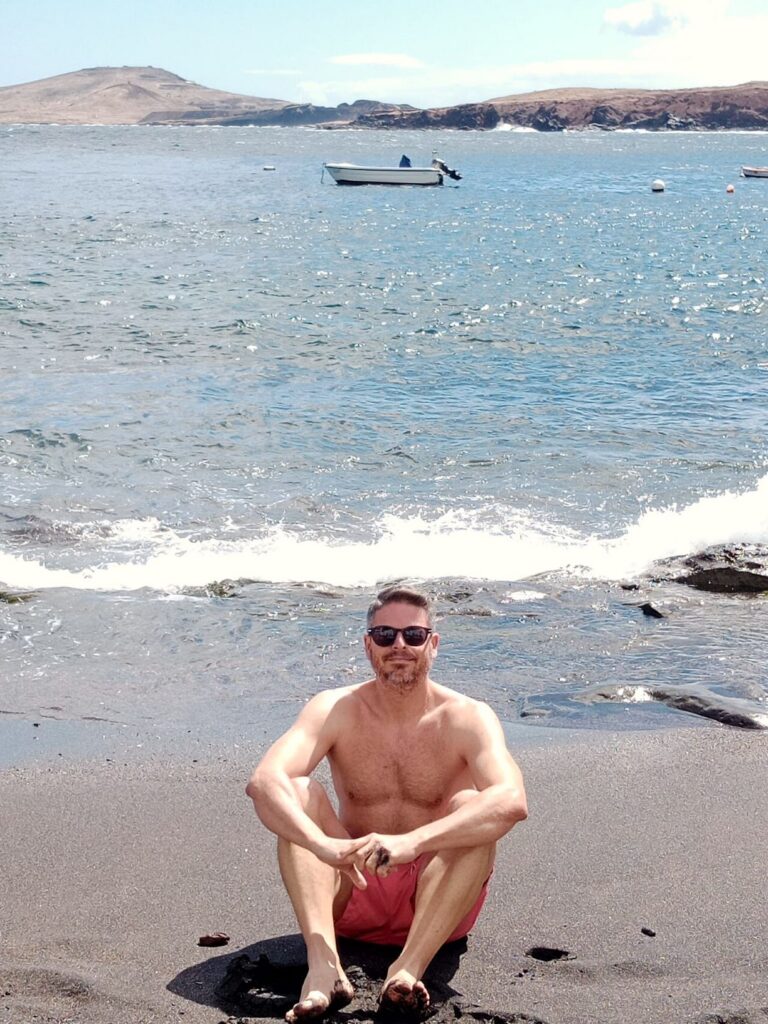
There would be the black of volcanic stone, the silver-grey of the Baltic Sea. But for Jorge, this grey is not emptiness. It is peace.
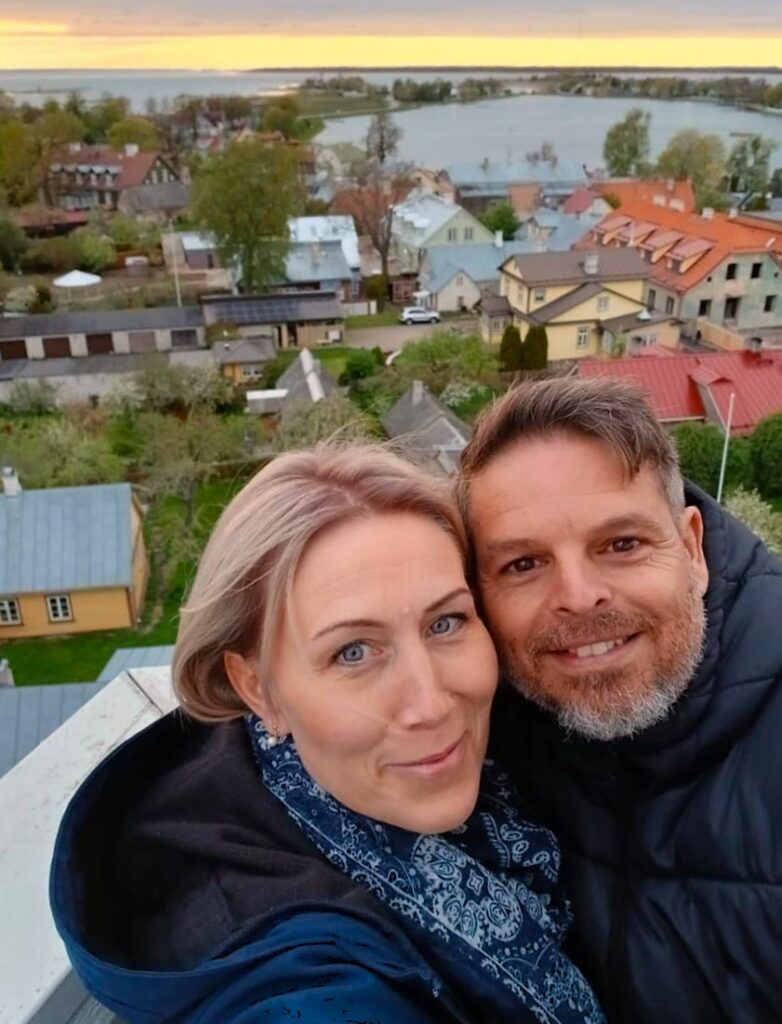
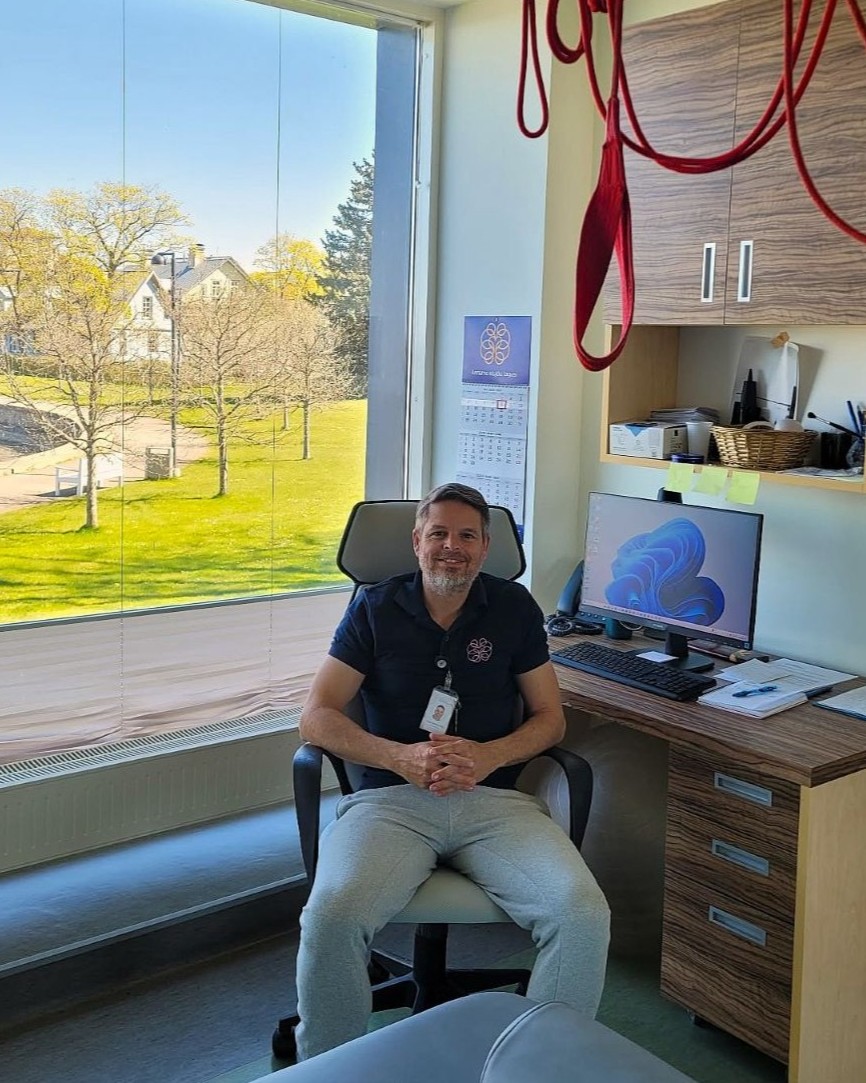
It would look like the view Jorge sees almost every day from his office window: Haapsalu Bay stretching quietly into the distance, birds gliding slowly across the water, and a landscape that never seems in a hurry. It would look like a deep red-gold sun sinking into the cool Baltic Sea, painting the sky in soft shades of amber, peach and violet. It would look like an old wooden bench by the promenade, a bicycle leaning against a fence, tourists wandering through narrow green streets, stopping every few minutes to take another photograph, unwilling to rush past a place that quietly rewards those who slow down.
His story would smell of sun-warmed pine trees, tropical flowers in bloom, the iodine-rich air rolling in from the sea, and damp earth breathing after a summer shower.
There would be the scent of wood smoke rising from a fire, freshly cut grass on a football pitch, the clean air of a hospital after the morning shift begins, and the dusty pages of dusty libraries hiding forgotten stories.
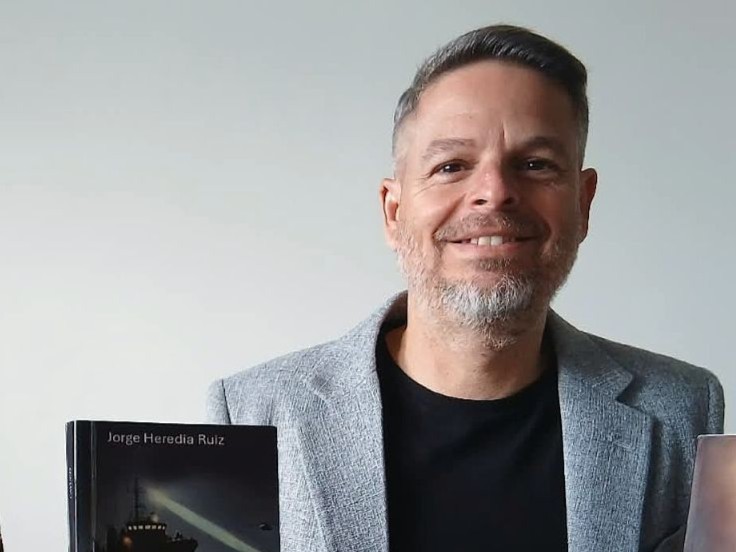
If his life were a book, its cover would show a man smiling. Not because the sun always shines above him, but because he carries a little piece of Spain wherever he goes.
But every story has a first page.
And Jorge’s first page begins on an island whose name comes from dogs, not birds. Gran Canaria.
Roots and Routes
This island is closer to Africa than to mainland Spain, a place that has always existed between different worlds.
For many visitors, Gran Canaria is an image of endless sunshine, beaches and summer. But the reality is much more complex. It is a landscape of contrasts, where volcanic mountains hide ancient cave settlements, where entire communities once built homes, granaries and places of worship inside the rock, and where one of Europe’s few commercial coffee plantations survives thanks to a unique microclimate.
The island can completely change within a short drive. A person can leave a sunny coast, enter a world of clouds and pine forests, cross dry landscapes that resemble the Sahara and return to the sea before the day ends.
Locals often joke: “If you don’t like the weather, drive twenty minutes.”
Even the clouds have their own name there: Panza de burro, meaning “the donkey’s belly.”
A grey layer that covers parts of the island, reminding people that even places famous for sunshine have their own shades and contradictions.
For generations, many Canarians left for Cuba, Venezuela, Uruguay and other parts of Latin America. Entire family histories were shaped by departures and returns.
Migration was not an abstract topic discussed in newspapers or politics. It was something that existed inside ordinary homes and family conversations.
This makes it especially interesting that Jorge’s second novel, “Cayuco”, is about migration and the search for a better future.
Perhaps this connection is not accidental.
Gran Canaria has always been a crossroads: African geography, Spanish culture, Atlantic identity, migration routes, explorers, sailors, traders and travellers.
He grew up believing that the sea connected places rather than separated them.
Perhaps that is why moving from one island to a country of 2,317 islands never felt as strange as it sounds.
“L” is for the way you look at me
After reading the first draft of this story, Jorge asked me not to forget one person.
Kati Kurst.
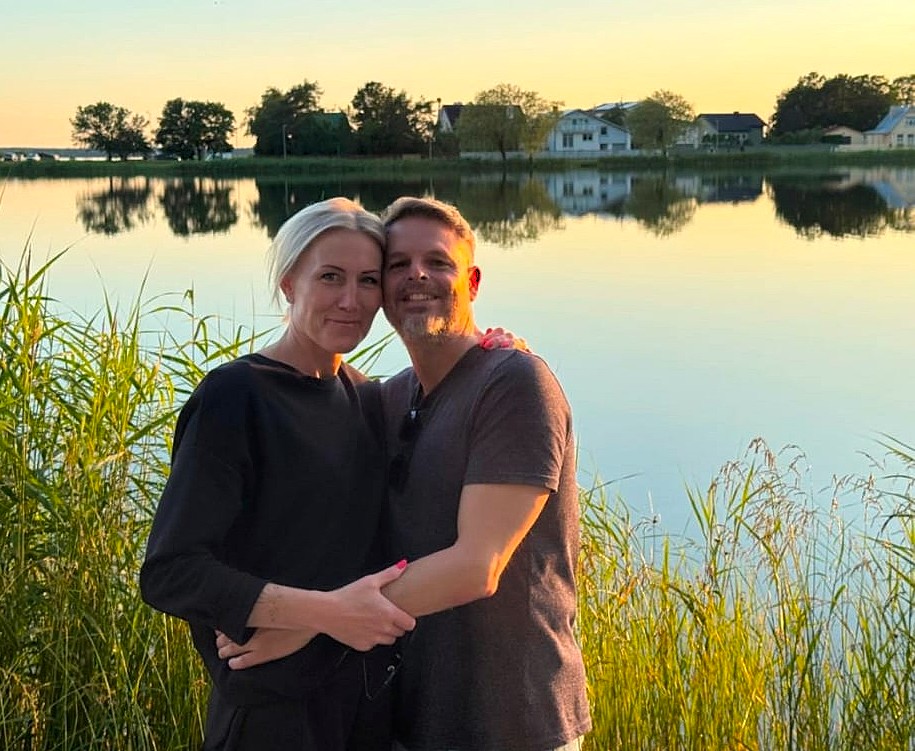
“She is a very important part of my current happiness,” he said.
When I asked what had first caught his attention, he answered: “Her eyes, muidugi.“
But what he admires most is not her appearance.
“Her kindness, because she is always ready to help people.”
Perhaps that is also why Estonia has become more than just another country. Jorge says that with Kati, it feels more like home.
“With her I am always busy in my free time, so I miss my family and friends less.”
Together they cook, travel, visit family, play board games and exchange languages. Jorge teaches Kati Spanish, and she teaches him Estonian. They never speak English.
The moment he realised she had become part of his future was surprisingly ordinary. They lived together for five months while his apartment was being renovated.
“We didn’t fight even once during the entire time. At that moment, I knew she was the ideal partner to think about the future.”
Jorge often explains happiness through a simple philosophy inspired by Ancient Rome. Life will always bring illness, negativity, jealousy and uncertainty. What matters is building strong foundations: love, health, meaningful work and financial stability.
“My definition hasn’t changed, but Kati has completely reinforced the side of love, making my shield stronger than ever.”
For someone who has rebuilt his life more than once, love is not the centre of everything. It is one part of a balanced life.
Sometimes it is simply the quiet confidence of knowing where you belong, who is waiting for you, and that tomorrow feels safe.
“She brings the peace of mind of knowing that I’ve found the perfect person to grow old with.”
A Second Life After Forty
Jorge often says something that, at first, sounds almost casual: “After forty, I am living a second life.”
Many people would use these words as a metaphor, but Jorge means them literally.
His first life was built around football. It was a world that shaped his identity for decades and took him to different countries, including Spain, China, Uzbekistan and Andorra, where he worked as a fitness coach and physiotherapist.
Football gave him opportunities, friendships and unforgettable experiences, but it also demanded constant movement and adaptation.
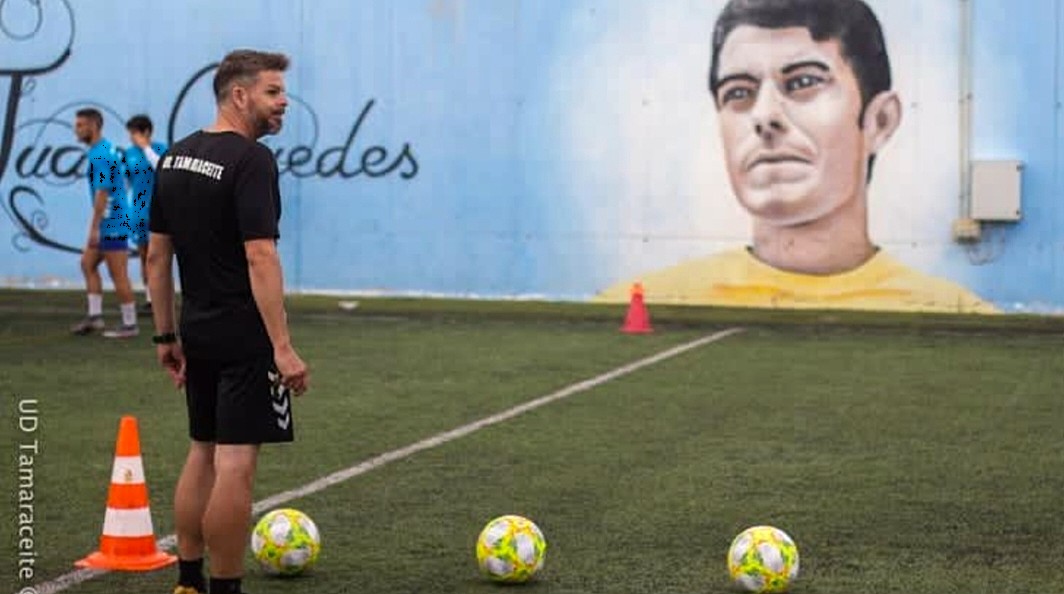
Professional sport is a world where everything is measured: results, performance, progress and success. There is always another match, another goal, another challenge.
Then two important parts of his life ended almost at the same time.
His marriage ended.
His football career came to a close.
Many people would describe such a moment as a crisis.
Jorge describes it differently.
For him, it was not an ending, but a transition.
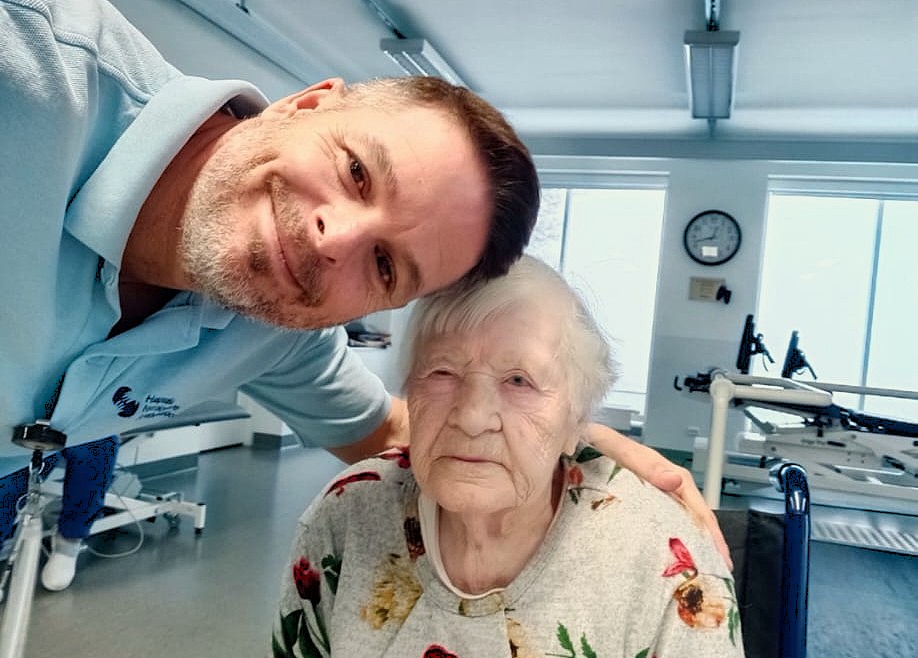
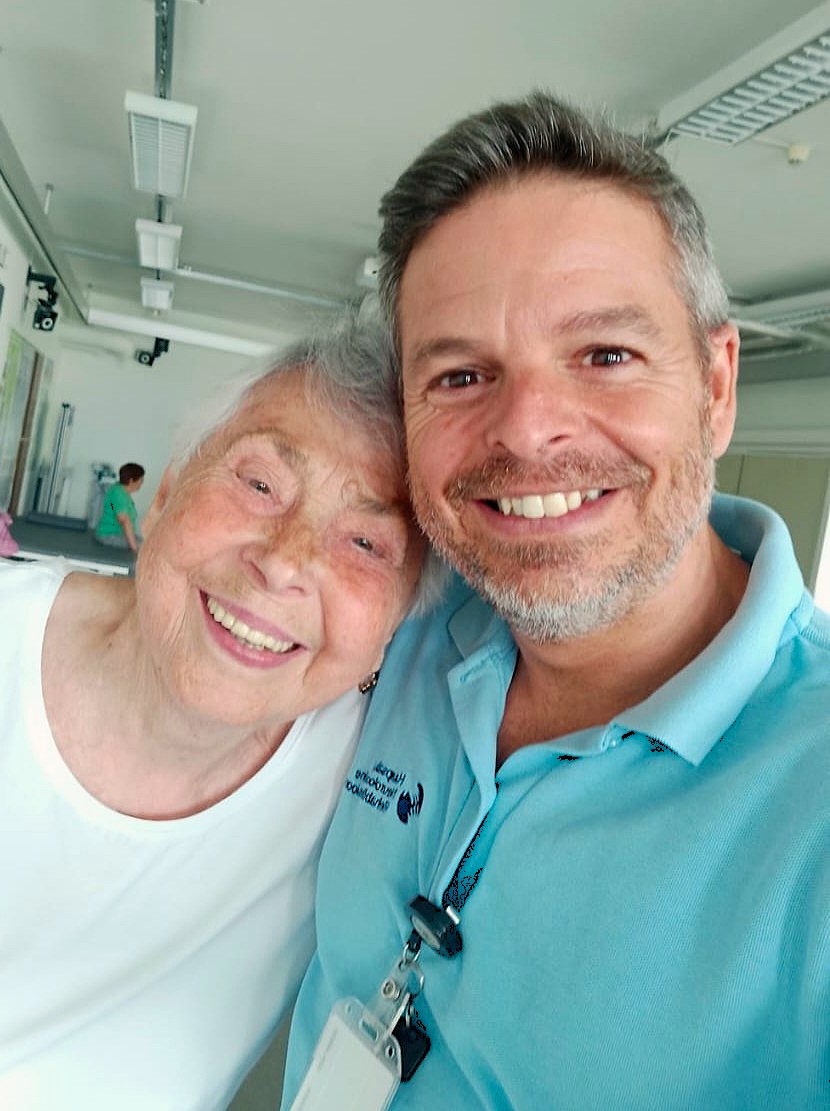
In 2022, an opportunity appeared in Estonia. Haapsalu Neurological Rehabilitation Centre was looking for a physiotherapist and through a series of connections and circumstances that seemed almost accidental, Jorge accepted the offer and moved north.
From Gran Canaria to the Baltic coast.
From professional football to rehabilitation medicine.
From a life built around speed and competition to one built around patience and recovery.
In football, everything happens quickly. In rehabilitation, progress cannot be forced. A patient’s improvement is often measured not by dramatic victories, but by small steps that require time, attention and persistence.
“It is not only about salary,” he explains. “If you are happy at work, it is very important. You spend forty hours there every week.”
For Jorge, happiness is not built from one single achievement.
It comes from balance.
As he says: “More important is connecting with people. Have a friend, have a girlfriend, have contact with your family.”
The Stories That Stayed
Long before Estonia, before football, and even before his professional career began, there was writing.
“I loved writing when I was a child,” Jorge says.
In high school, he won literary competitions twice. Then, as often happens, life became more complicated. University. Work. Family responsibilities. Writing slowly moved into the background. But the desire to create never disappeared completely.
For a while, another form of creativity occupied his attention: board games.
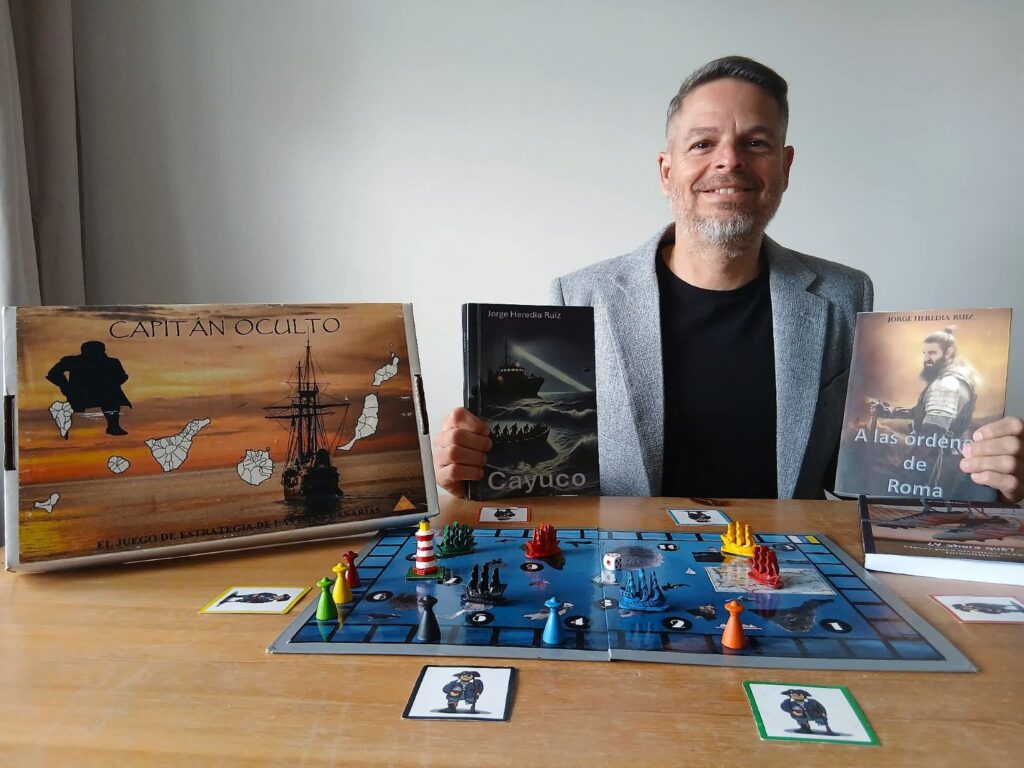
He created six different games, although none of them were ever published.
The result was never the most important part. What mattered was the process itself: imagining worlds, creating rules and turning ideas into something real.
Years later, during the pandemic, when the world suddenly became quieter and many people found themselves spending more time alone, Jorge found his way back to writing.
“What am I going to do now?” he asked himself.
The answer was something that had always been waiting in the background.
Writing.
Since then, Jorge has written a self-help book for footballers approaching retirement, completed two novels and continues working on his third.
His books move across centuries and continents, exploring Roman warriors, African migrants, forgotten soldiers and historical conflicts.
At first glance, these subjects may seem completely unrelated.
But beneath all of them there is a common thread. Movement. Displacement. People trying to survive changes they did not always choose.
Perhaps Jorge is drawn to these stories because, in many ways, he understands them personally.
His own life has also been a journey between different worlds.
History Through Human Stories
Jorge’s first novel, At the Orders of Rome, takes readers back to 30 BC, when a Canarian warrior named Doramas is captured after a pirate attack and becomes caught in the conflicts of the Roman world.
The story combines the history of Gran Canaria, the Roman Empire and the personal journey of someone forced into circumstances beyond his control.
His love for Roman history is clear.
He reads historical authors such as Santiago Posteguillo, Massimo Manfredi, Simon Scarrow, Harry Sidebottom and Ben Kane, and wanted to create his own story within that world.
His second novel, “Cayuco”, explores a completely different period but carries a similar theme.
It tells the stories of African migrants who risk everything in search of a better future.
Through different characters and experiences, the novel focuses not only on migration itself, but on the human beings behind it — their hopes, fears and resilience.
His third novel explores the Rif War, a conflict between Moroccan tribes and the Spanish colonial army at the beginning of the 20th century.
The inspiration came from something very personal: a commemorative plaque near his mother’s house dedicated to a neighbour who died in that war.
While researching, Jorge discovered a chapter of history that is rarely discussed in Spanish schools. A painful episode in which thousands of young Spanish men from poor families died in a conflict many later considered unnecessary.
“When I like one story, I like to take a lot of information. And then I like to start to write it.”
Peeling Back the Layers of Spain
For many people, Spain exists first as an image. A country built from familiar symbols:
Flamenco.
Sangria.
Endless sunshine.
Siestas.
Loud conversations and people who always seem relaxed.
It is an image repeated so often that it almost becomes a place of its own, a Spain built layer by layer from clichés. But like many things simplified for tourists, the reality is much richer.
Flamenco is one of the most recognisable symbols of Spain, but it is mainly connected with Andalusia and does not represent everyday life across the entire country.
The same happens with sangria.
Although it has become famous abroad, it was never a regular part of Jorge’s own life.
“I lived in Spain for forty years and I’ve never seen my family or friends drinking sangria.”
Spanish culture is also often misunderstood as a culture of laziness and endless relaxation.
The truth is more complicated.
Spain does place great importance on life outside work: family, friends, terraces, conversations and shared meals.
But valuing life does not mean avoiding effort. It means protecting space for things that make life meaningful.
Perhaps this is one of the reasons Jorge adapted so well to Estonia.
He understands that every country has its own rhythm.
Every culture has something to teach.
The Philosophy of Paella
Ask Jorge about paella, and his answer quickly becomes a detailed explanation of ingredients, proportions and patience.
“La paella, of course.”
He talks about rice, seafood, saffron, olive oil, fish stock and the importance of doing every step correctly.
“The key is the ratio,” he explains. “One part rice, three parts broth.”
He describes the preparation, the order of ingredients, the timing and the final minutes when the paella must rest before it is served.
The pan itself travelled with him from Spain to Estonia.
“I have my own grill. I brought it from Spain.”
Of course he did.
But after all the details about technique and ingredients, Jorge reaches the part that matters most.
You make it with friends.
Because in his world, the best things in life are rarely experienced alone.
A good meal.
A good conversation.
A good bottle of wine.
A few hours with people you enjoy.
The most important ingredient is not rice or saffron.
It is company.
The Taste of Home
Food is one of the easiest ways to understand a culture.
For Jorge, it is also one of the easiest ways to understand a person.
Cooking is one of his hobbies, and when he talks about food, he does not speak only about recipes. He talks about habits, health, memories and the pleasure of preparing something for people you care about.
One of the first things he explains is a small but meaningful difference between Spanish and many other food cultures.
“In Spain, we don’t use mayonnaise a lot. We use olive oil.”
Olive oil is the foundation of many everyday Spanish dishes, especially fresh salads.
Because the climate is warm, simple meals with fresh ingredients are a natural part of daily life.
Jorge enjoys creating his own combinations, often mixing flavours that might seem unusual at first.
One of the salads he recommends includes pomegranate, smoked salmon, beetroot and olive oil. For an even stronger flavour, herring can also be added.
“It is very exotic, but very good, very tasty.”
He has several other recipes that he prepares regularly.
Another favourite combines mango, tomato, cheese and olive oil.
But even here, Jorge pays attention to balance.
“Not the strong cheese. If the cheese is strong, finally the salad is not tasty. Normal cheese is better.”
For him, good food is not about making things complicated.
It is about understanding harmony between ingredients.
Another salad he often prepares is made with broccoli, tomato and olive oil.
These are dishes he cooks not only for himself, but also for his girlfriend and her family.
“They like it a lot.”
This small sentence reveals something important about Jorge. Cooking, like many things in his life, is connected with sharing.
Food is not only something you prepare.
It is something you give.
He usually prepares several different salads that he returns to again and again, adapting them with small changes.
Olive oil remains the constant element.
When asked about his favourite dish to cook, the answer comes immediately.
“Paella.”
Of course.
Paella is perhaps the dish that connects Jorge most directly with Spain. He still cooks it regularly in Estonia, especially seafood versions. His favourite is black paella, made with black rice from squid ink, although he also enjoys the traditional yellow version.
There are many varieties: seafood, mixed versions with meat and seafood, and even one closer to plov and prepared only with meat.
The way he talks about paella reflects the same qualities that appear throughout his story:
Patience.
Attention to detail.
Respect for the process.
After moving to Estonia, Jorge has also discovered local food traditions.
He describes Estonian cuisine as very international, but there are some dishes that caught his attention.
“I like kapsarullid.”
Herrings are another interesting discovery.
“In Spain, herrings are very exotic, but here they are everywhere. I like herrings also.”
For someone from an island surrounded by the Atlantic Ocean, his appreciation for fish is perhaps not surprising.
Unlike many people who associate winter with special comfort food, Jorge does not strongly separate summer and winter cooking.
For him, the temperature outside does not decide what appears on the table.
Instead of cooking only when he has time, he plans ahead.
“I cook a menu for all the week.”
He often prepares food in advance, like salads for the following days.
He also prefers taking his own food to work rather than eating from the buffet.
“I can eat there, but I don’t like it.”
The reason is simple:
“You don’t control what you eat.”
He admits with a smile that the buffet can also be dangerous because he enjoys food.
“I like eating.”
He appreciates quality, but he also values simplicity. He cooks because it brings him pleasure, it keeps him healthy and it gives him another opportunity to create something for the people around him.
Estonia: Choosing Peace Over Perfection
A person can spend years looking at what is missing and forget to appreciate what is already there.
Jorge believes that happiness is built from much more important things: Relationships. Health. Meaningful work. Peace.
“You can be in Gran Canaria with the sun, but if you miss one of these things, you can not be happy.”
He chose Estonia because, at that moment in his life, it gave him something he needed. A different rhythm. Less stress. A feeling of space.
He describes Estonia as a place where life feels easier.
You can walk everywhere.
You have fresh air and nature nearby.
For someone who spent years in professional sport and large cities, this slower rhythm became a discovery.
It’s time to live and to enjoy.
“You lose your life on the way driving the car home.”
But it’s definitely not his story…
Read more personal stories
People living in Haapsalu share stories of new beginnings, community, and life in Estonia.
Explore the stories →