
Adam’s Story
Adam arrived in Estonia without a plan. He was drawn in by the mysterious sound of the Estonian language. Today, he is one of the most dedicated voices bringing Estonian literature to the world, having found his own harbor in the quiet streets of Haapsalu.
Interview: Svea Stamberg & Tetiana Khimich
Written by: Tetiana Khimich
Why Estonia?
He did not come to Estonia for a better life. He came for a language he didn’t understand.
No plan, no job waiting, no clear reason that would satisfy anyone practical. Just a feeling that this strange, distant language was worth following.
So he followed it.
But how was it 10 years ago?
“Different. That’s amazing, seeing how the country has changed over 20 years.
Remembering how things were then, it still felt very much like the transition period of the 90s. You could still feel elements of the Soviet occupation. And now some things have changed for the better and some things not so much for the better.”
He jokes that Estonia feels like the annoying little brother to Finland, always looking up to it and wanting its approval, while the other Baltic countries are like slightly irritating step-siblings in one big, messy family.
A life that doesn’t try to be easy.
He feels it has become much harder to get by, as inflation has risen, especially since joining the euro, and that Estonia has often had some of the highest inflation in the eurozone.
“So it’s like, and being a freelance artist, author, poet, and translator. It’s gotten harder and harder to make ends meet just because taxes have increased and prices have increased. But I, as an artist, can’t really increase my prices at the rate that others can. And just the demand on time and demand on everything else.”
In Estonia, many freelancers end up working through the OÜ (private limited company) system, where they set up a company and run their income and expenses through it. At first, this can feel complicated or unnecessary, but over time people learn to manage it. Once understood, it becomes a workable way to organize freelance work.
“The government has also been for years making life harder for small businesses. So it’s like, you really can’t win. But yeah, I try not to complain too much. It’s still my… I love Estonia, it’s my home.”
It was supposed to be an experiment.
“I came here to see if it would be possible to learn the language through immersion and create a community and see what it would be like to be an immigrant.”
In 2006, he studied abroad at the University of Minnesota, where he’s from. He first spent a month in Kyiv as part of a Russian language program, spending time with local Ukrainian guys.
“It was a very vodka-fueled month, but a very fun, very great time.”
That August, he went to St. Petersburg and stayed there for almost six months. During that time, he visited Estonia for the first time. Just a weekend trip as part of the program.
„And I was just hearing the language, something just clicked. It was just magical to me. “
The Moment Adam’s Story in Estonia Began
“I just really, it was just immediately, I was fascinated by it. And I wanted to see if it’d be possible to learn it, to figure out what was going on with the language.”
“But there weren’t any textbooks in the bookstores. It was really hard to get any kind of English-Estonian textbooks. Russian-Estonian, maybe found here and there a bit, but I still wanted to learn through English. So I started with a dictionary, a phrase book, some newspapers, and tried to map out the grammar and vocabulary myself.”

“In the summer of 2007, I went to the month-long Tallinn University summer school, getting an actual classroom-based learning for the language.”
After graduating from the University of Minnesota, he knew that working in a café was not a long-term solution. So he made a bold decision and moved to Estonia to fully immerse himself in the language and culture. He learned by doing, met people, and figured things out as he went.
The first year was difficult. But he stayed.
He finds his love at work.
“We worked together at a café. She was my first partner. It was 2008. Cellphones really weren’t a thing at all. We had different shifts at the café sometimes. And so we would leave notes for each other. We had little secret hiding places and we’d exchange notes and stuff.”
“That was my first very big love. We were ultimately together for five years.”
“I was just about to move back, actually. I’d already bought tickets. I had already found a flat to start renting in Minneapolis.”
He thought, okay, this was a good experiment. But then he ended up deciding to keep trying thanks to being with her.
“And then after that relationship ended, it was also very difficult to continue living here. But I realized through that, too, that my connection wasn’t only a person. It is still the language. It is still the country.”
He says he’s been all over Estonia…
He’s been all over Estonia, though the west has always drawn him most. Tallinn was home once, but Haapsalu has held him for six years. A place he’d longed for, finally found.
One of his favorite spots is Bürgermeistri holm, at the tip of the peninsula. In summer, he swims there, the quiet stretching across the water, the view sharp and still, like a held breath. He has a small patch of woods in Noarootsi, where a solar panel basks quietly and he can simply be among the trees.
The islands call him, too. Hiiumaa, especially. He bikes to Rohuküla, takes the ferry, carries only a tent, a sleeping bag, some food, and lets the wind and paths guide him. He camps, wanders, watches life unfold in the small, unhurried rhythms of the land.
“Why Hiiumaa, not Saaremaa? That’s a good question. Yeah, I guess there is a different feeling between Hiiumaa and Saaremaa. I mean, I like Saaremaa. I like Kuressaare and other places there, but it’s more populous.”
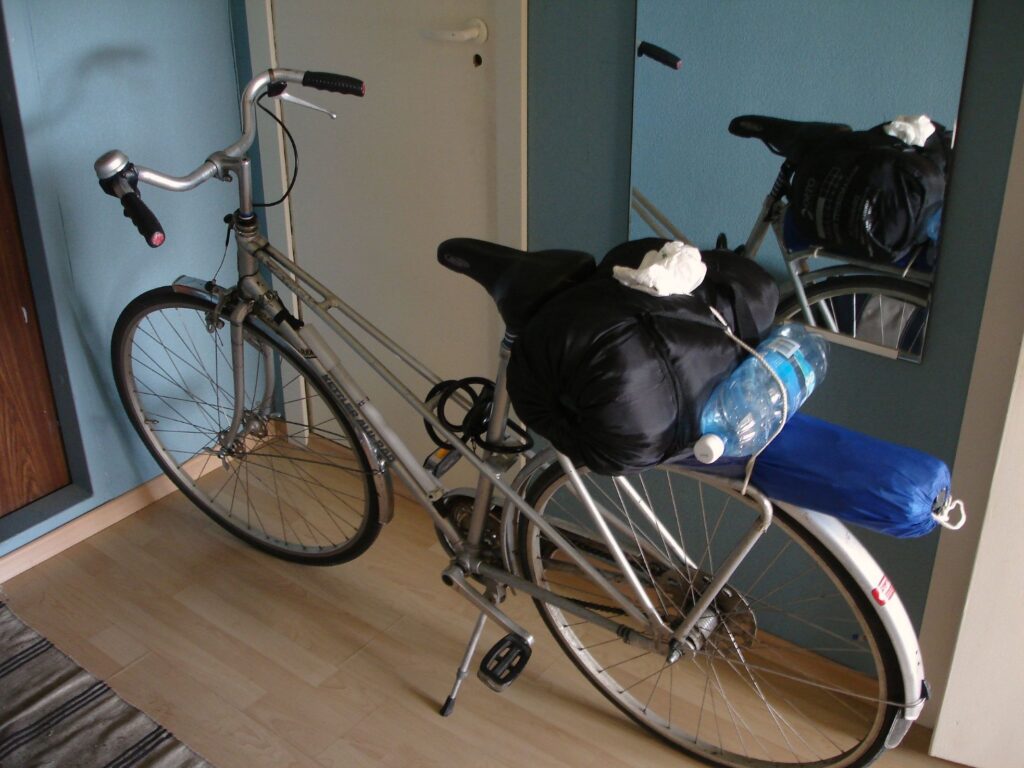
He sees Hiiumaa as a deeply quiet, forested island, where nature stretches uninterrupted and human presence feels minimal. Unlike the more urban Saaremaa, Hiiumaa carries a sense of intimacy and warmth. Cozy yet open. It draws people in. He knows friends who have returned there, and it seems to quietly embrace those who come, offering both solitude and a sense of belonging.
Between peace and responsibility.
“Okay. Well, so now I have a daughter who just turned four. So the routine is very much centered around her.”
“So yeah, that’s my day. Usually I get up and take her to daycare. She stays home on days like today when she has a cough and is sick. But otherwise, I just kind of settle into my day.”
“And then I might reply to some emails and start doing some translating.”
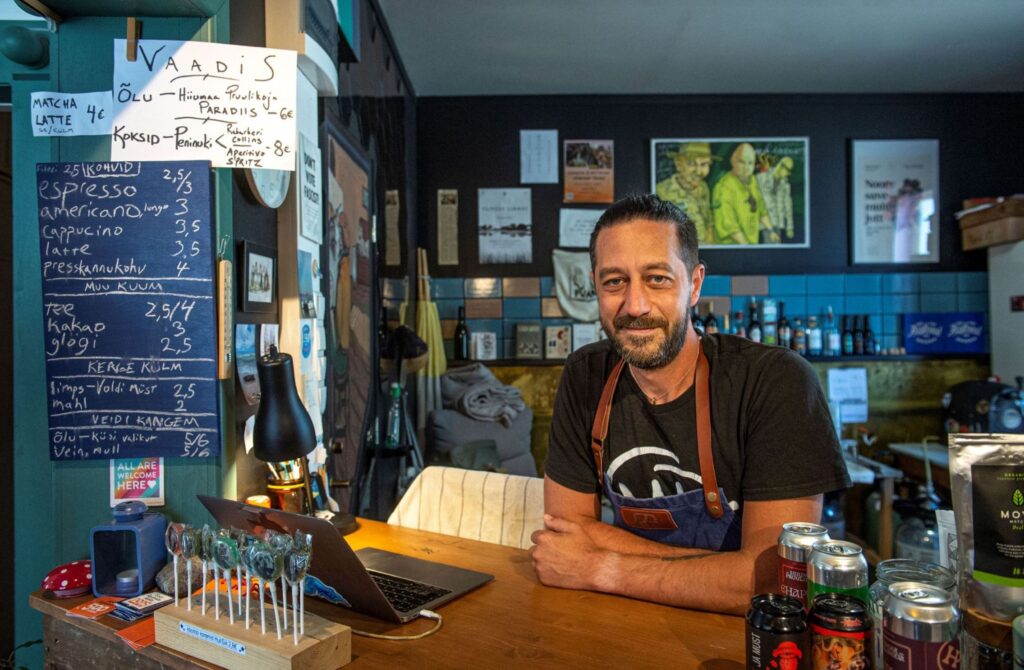
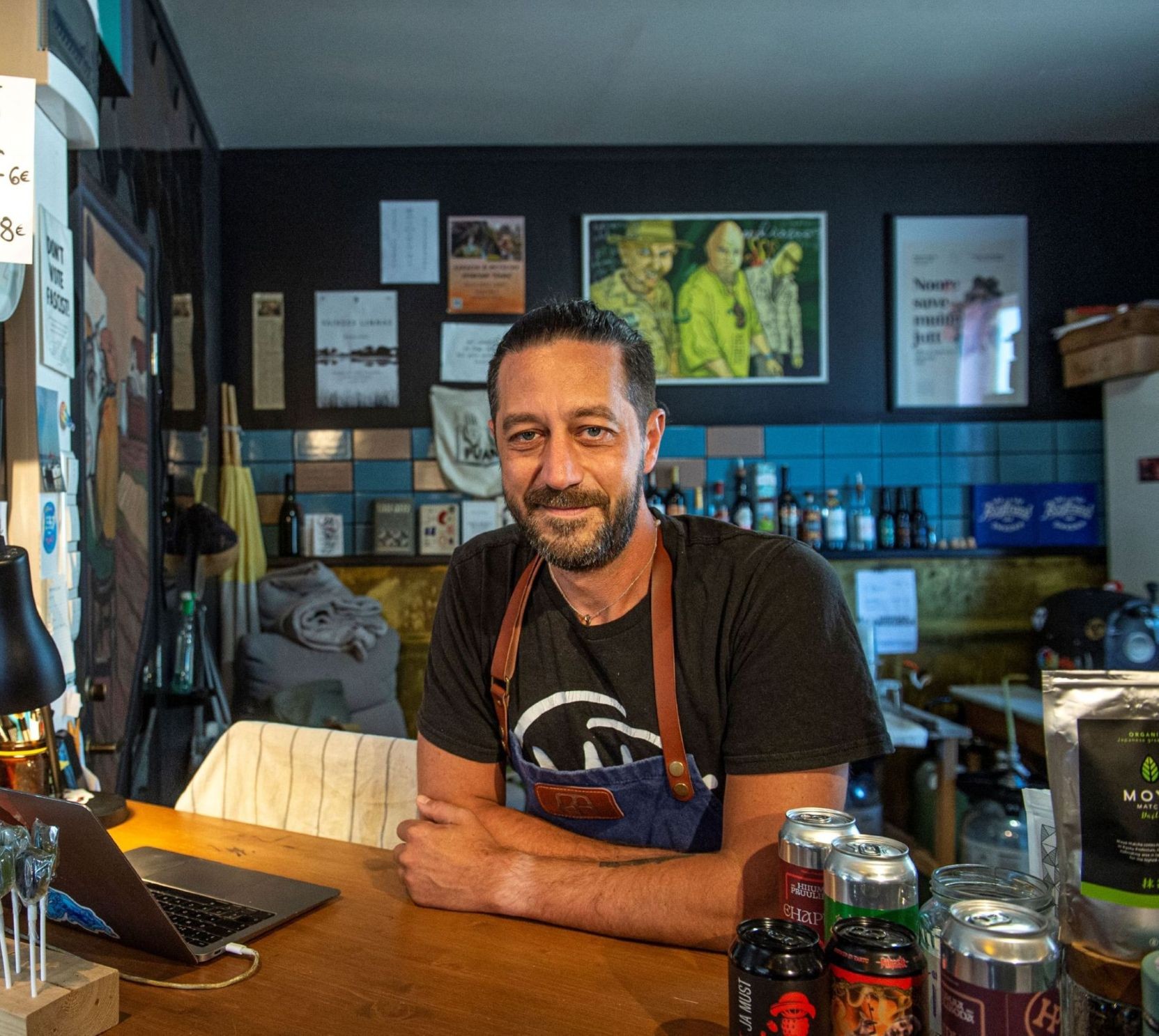
“And then I’ll either stay at home and continue translating there, or I come to my bookstore/café and open it up. I opened it kind of as an office for myself… and if people come in and buy coffee or drinks or books, they help pay rent.”
“I don’t make money with it. Ideally, I would at least even out to zero and it wouldn’t cost me anything. But at the same time, it’s nice having this as a place.”
“I would like to have more time for focusing on things I would like to have. More time for focusing on work calmly. Kind of my own time. But just with a small child… those are dreams to be realized years from now.”
Winter?! Again?!
„How are you helping yourself not to get crazy there for nine months?“ “It’s a good question. It’s something I ask myself every single year.” “It’s the darkness… I feel like it’s the hardest part.” “Winter swimming really gives this burst of energy. But I haven’t done it for over two months… the sea level dropped so low, there was so much ice, and there was only like a meter of water. Then it was just… I didn’t want to have a mud bath every day.” His relationship with the weather, he says, isn’t exactly healthy. “In Minnesota, it gets down to negative 40 degrees. Not as extreme here, but I feel like it’s kind of an abusive relationship.“„When it's dark and cold, and you're miserable, you don't know why you're there. But then the first warm day comes, and you forgive everything.“
“And I think that this is the best place on earth. Why would I ever leave this? It’s a cycle, and the cycle continues. Then, all summer long, this is the best place ever.”
He realized that a truly “healthy” version might not exist for him anywhere. Nordic climates have charm, yet they share harsh winters. He’s a northerner at heart, drawn to snow, ice, and the sharp clarity of winter. The long, dark stretches still press on him, a quiet challenge he embraces year after year.
He loves the few warm weeks of late April and May, when the woods are alive and the sea beckons, even if mosquitoes and ticks remind him why you can’t spend every day outside. Growing up in the forests of Minnesota and Northwest Wisconsin, he’s used to wilderness and its quiet charms.
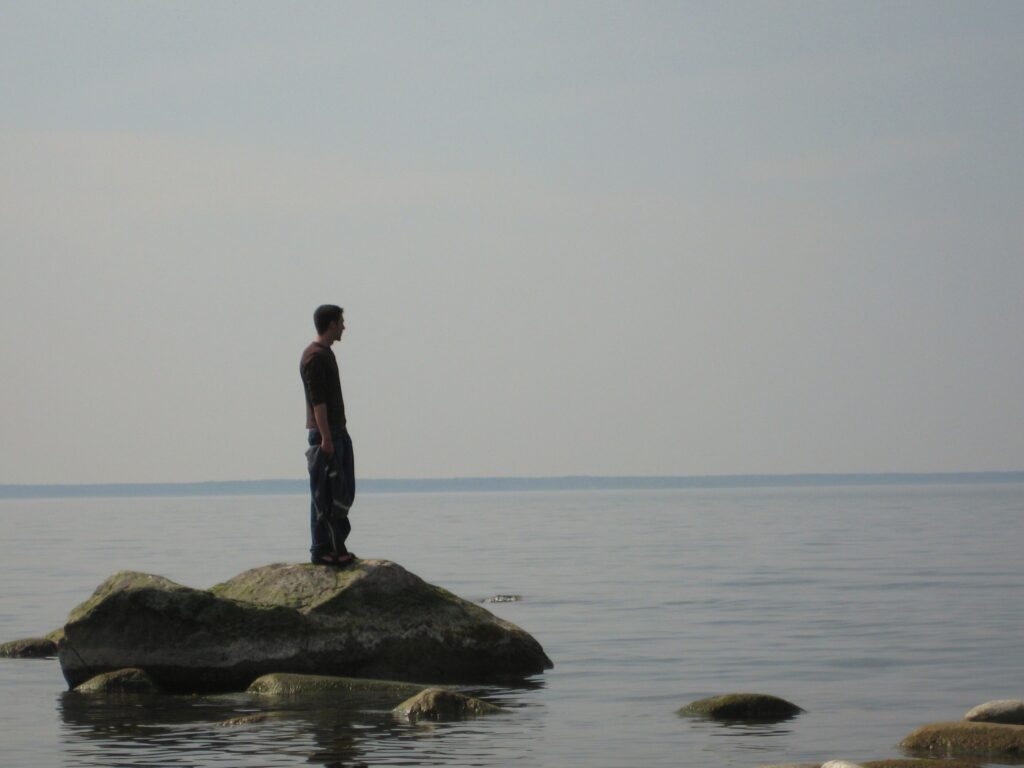
The sea, though, is something new, something magical. His perfect day is simple: kayaking to a tiny, uninhabited island, swimming, reading, having a beer, maybe doing a bit of translating, but mostly just breathing, surrounded by water and sky. Peace is what he craves. Even with a four-year-old daughter, these moments of calm, often after a sauna or out in nature, are rare and precious.
Pets, by contrast, never captured his heart fully.
Beer or healthy food?
He enjoys Estonian craft beer, though he still thinks Minnesota does it better. Adam tried brewing himself, but honestly, he gets more joy just tasting what others have made. And the food, oh, the food! European ingredients are fresher, richer, more alive than anything he usually found in the U.S. “Cuisine is not one of the reasons I moved to Estonia, but I don’t complain about that.” He notices the difference in ingredients. After a week in the U.S., his skin is greasier and he just doesn’t feel right. In Estonia, food is simple and hearty with blood sausage in winter and buckwheat occasionally. Mostly, he likes cooking for himself: tacos, rice bowls, small pasta dishes. It’s practical, enjoyable, and makes everyday life a bit better.Minnesota
He doesn’t travel to Minnesota much anymore, partly because flights are expensive and partly because things there feel difficult these days. Still, the state holds a special place in his heart, and he misses the people and the landscapes he grew up with. His last visit was almost two years ago, for a friend’s wedding.
He might travel to California this summer with an Estonian choir, but he feels uneasy because of the cost and the tense political climate in the U.S.
“Minnesota is still very dear to me. It’s still a place that I truly love.”
Choir? Why not?!
He’s been singing in a Tallinn choir for over ten years, and joining it was pure luck, or maybe fate, with a hint of beer. He’d been looking for a way to play more music in Estonia: violin since age four, folk fiddling, orchestra stuff, but nothing regular.
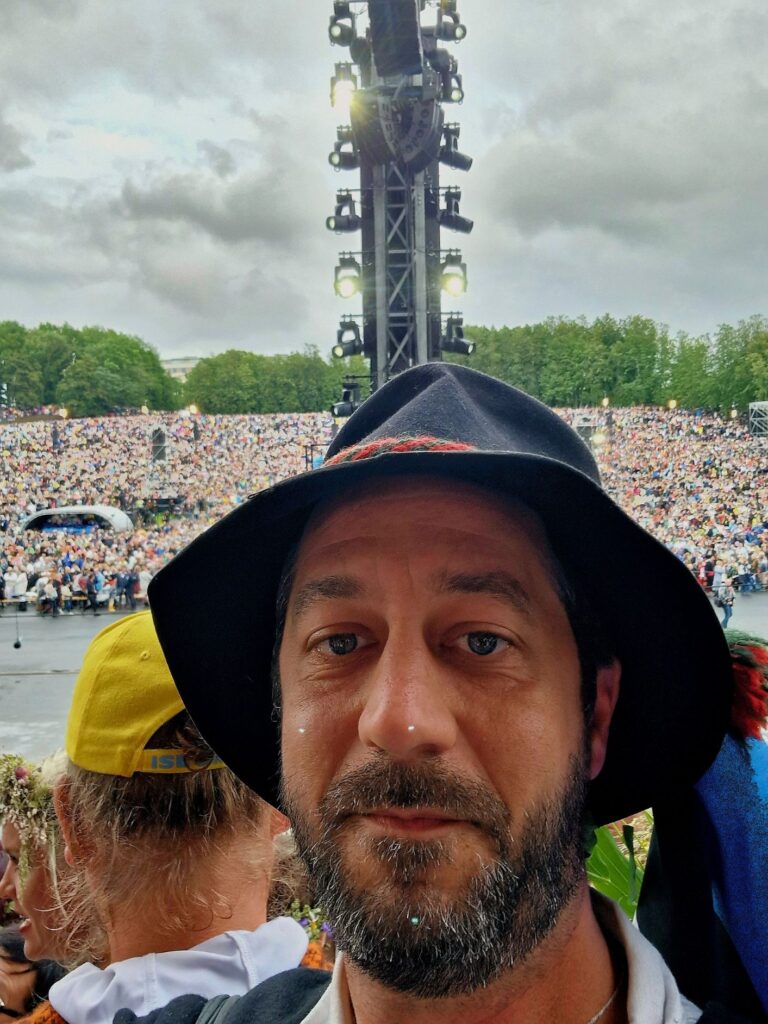
One evening, a little tipsy with a friend, he spots a couple of men being ridiculously affectionate in public. “Wow,” he thinks, “that’s beautiful.” He compliments them, asks how they know each other. They say casually, “Oh, we sing in a choir.”
Of course. Choirs. Warm, affectionate, drama-free men in a choir – perfect. One thing leads to another, and they give him their contact details and invite him to audition. Ten years later, he is still there, traveling across Europe, including Austria, Germany, Northern Ireland, Sweden and Latvia, and enjoying every sweaty, emotional, slightly chaotic moment.
There is singing, there is laughter, and sometimes a song moves him so deeply that he finds himself crying in the middle of a festival.
“It’s really great. It’s fulfilling. It gave me a way to make truly good friends and to find the kind of community I needed. Estonians are not the easiest people to become friends with, as you probably know.”
He noticed that making friends with Estonians was like trying to join a secret club.
He noticed that making friends with Estonians was like trying to join a secret club. Most had already picked their lifelong buddies back in grade school, ticked the friendship box, and were thinking, “Yep, mission accomplished. No new members allowed.”
Over the years, he slowly built a life and formed friendships in Estonia through the writing scene, the Writers’ Union, Mixed Choir Noorus, and a few other places. It took time, but those connections now make the country feel like home.
Lost in Translation
He’s been translating for at least 16 years. It began humbly, volunteering to translate news articles for a nonprofit Finno-Ugric organisation, and eventually led him to the Estonian Literature Centre. By 2010, he was translating literature full-time.
“Since 2011, I think I’m the only full-time translator of Estonian literature into English in the world. As niche as can be.”
Some works resonated with him deeply, such as Exercises by Tõnu Õnnepalu, whose calm, reflective style felt strangely familiar, as if they shared the same wavelength of thought and emotion.
Then there is Silverwhite by Lennart Meri, his most ambitious project to date. Published last year, it was a monumental challenge, interweaving multiple storylines, complex language, and subtle nuances. Translating it wasn’t easy, but bringing Meri’s vision to life in another language left him with a quiet sense of pride, the kind that makes all the late nights and painstaking word choices feel completely worth it.
Earlier in his career, he was fortunate to receive a three-year writer’s salary. The opportunity, offered through the Ministry of Culture and the Estonian Writers’ Union, gave him crucial financial breathing room, a stable base that allowed him to continue freelancing without constant pressure and to finally build a more grounded life instead of always postponing things.
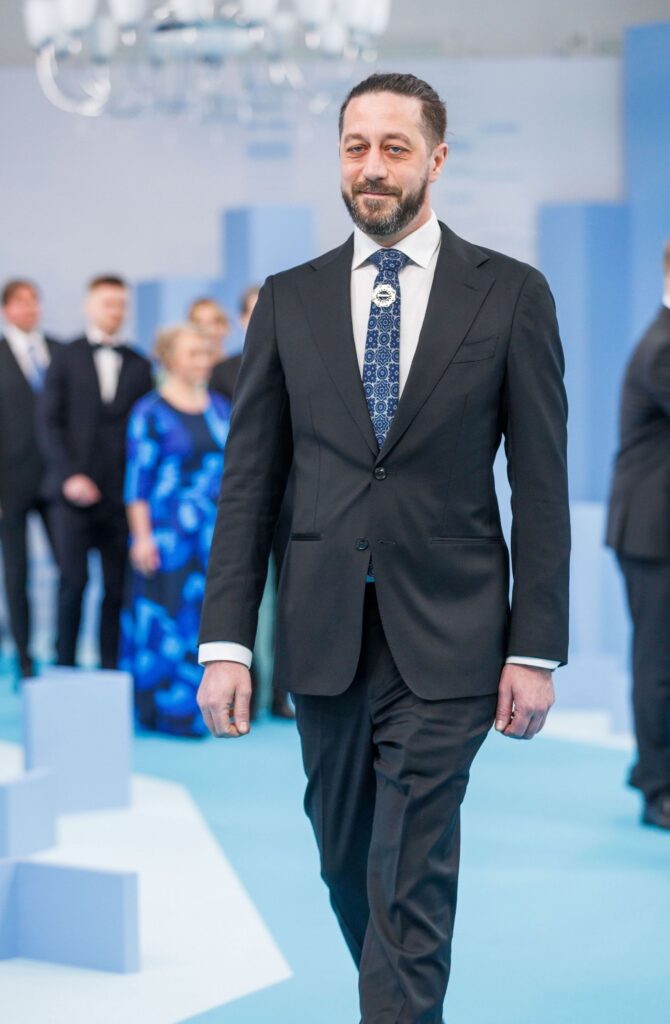
“Also, I’m an Estonian poet. Not Estonian ethnically, but Estonian in the sense that I write poetry in Estonian. I have three collections so far. Two more are pretty much ready. One will be published later this year. That’s definitely a big accomplishment. First, find the courage to write in a language that’s not your native language. Then share it with friends who are poets. They encouraged me to write and publish. The feedback from very respected Estonian poets has been really… I feel very honored to be part of that community and able to express myself in that way.”
Watch and listen to a poem by Adam Cullen from his collection “Samblik / Lichen”.
He performs the poem “Rain / Vihm” in both English and Estonian.
Happiness
Is he a happy person, I asked.
“The last couple of years have been extremely difficult personally. So it definitely makes the answer complicated. But on the whole, having an amazing daughter, living in Estonia, even with difficulties, just the environment and atmosphere around me… And also now having a sauna to sweat out my worries as often as I need. That’s, I guess, an in-between answer, but optimistic.
“A lot of things are not in my control. It’s just managing the way things are, the craziness of the news and everything where the world is heading. If I can keep balanced and be a source of positivity for my daughter and people around me, then I can be happy with that.”
Why he stayed
He looks out the window, watching the spring light bounce off the sea. Somewhere between pragmatism and poetry, between exhaustion and joy, between Baltic coldness and darkness, he found a place where he can keep trying, keep dreaming, and keep laughing.
Charming Estonia… unreachable, like a shy girl on a first date. Draped in the misty veils of dawn, kissed by red, frosty sunsets, alive in the brilliance of summer nights, and stretched across winters as long and slow as dripping resin. She captivates with her complexity and mystery. But once you love her with your whole heart, she can never be erased from it.
The melodic Estonian language… feels like the soft song of a spring dawn, the call of birds across the islands, or a harsh winter blizzard. It echoes in the rustle of the wind, the crack of thin ice on a bog, the chime of a bicycle bell, footsteps on cobblestones, the distant hum of airplanes, and the laughter of children.
That's why he came here.
That's why he decided to stay.
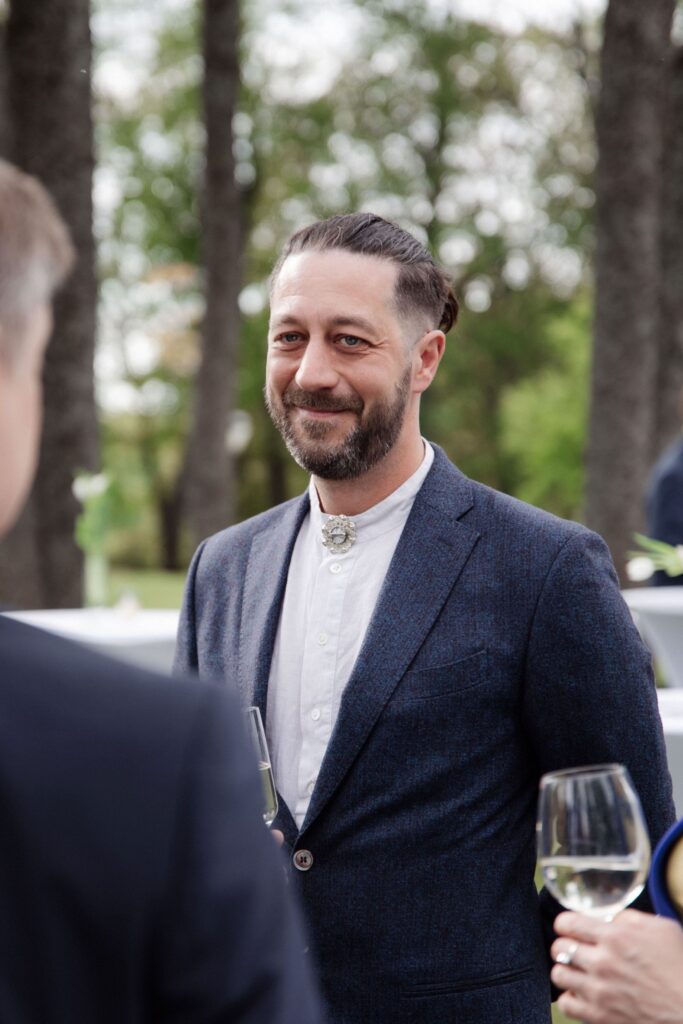

Visit Adam’s bookstore café
Visit Adam’s Pagu café in Haapsalu, a unique place that is at once a café, a bookstore, and a small cultural meeting space.
As part of the Integration and Adaptation Support in Haapsalu project, Adam has also hosted Saturday morning Estonian language conversation sessions there. To see what’s happening at Pagu, keep an eye on their Facebook page. If you’d like to join our meetings, conversation groups, or other events, follow the updates on our website.
Read more personal stories
People living in Haapsalu share stories of new beginnings, community, and life in Estonia.
Explore the stories →