
Mila’s Story
The war changed Mila’s life forever. In Haapsalu, she found a place to begin again, support others, and build a new home for her family.
Interview: Svea Stamberg & Tetiana Khimich
Written by: Tetiana Khimich
The Beginning of the War and Haapsalu
The beginning of the war was a dreadful time, one that, against all odds, brought many people together. Spring 2022. A small Estonian town called Haapsalu, one that many Ukrainians had never even heard of before, suddenly became their home for an indefinite period.
A foreign country, an unfamiliar language, a different climate, different people. And yet, unexpectedly, a kind of “bridge” appeared between these frightened newcomers and the still-unknown Estonians. A person emerged who helped many refugees adapt to life on Baltic soil, while also giving the city authorities a chance to understand the needs of those who had just arrived.
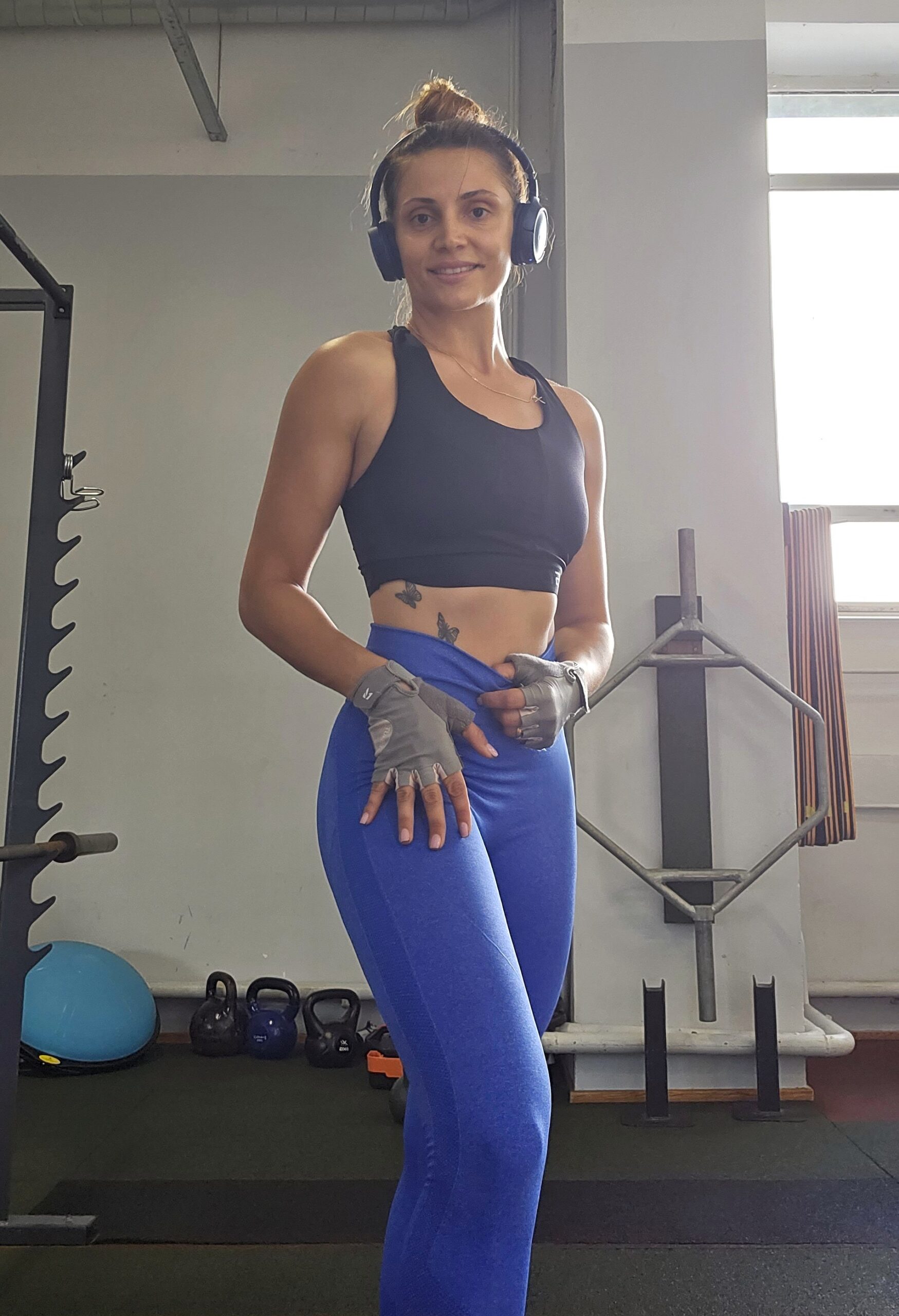
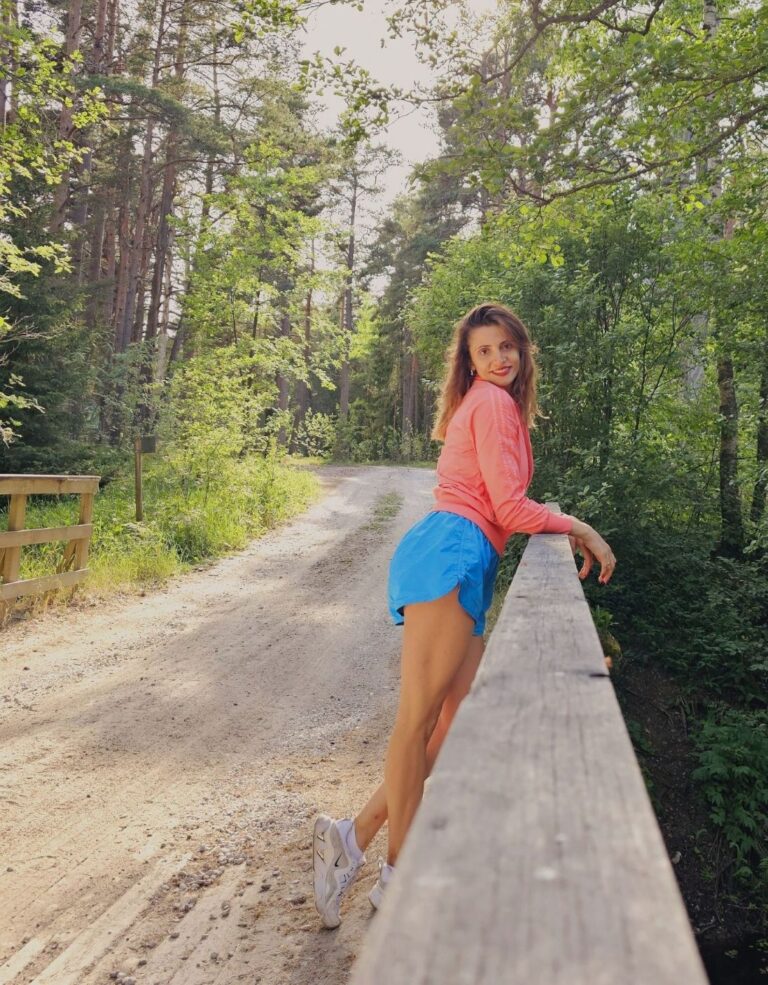
That person was a beautiful young woman named Mila.
“I come from the city of Yenakiieve—a small industrial town.”
That is why it was so painful for her to watch, from the outside, the suffering of people she shared a homeland with. Her people. Fellow Ukrainians.
Mila’s Emotions and Inner Turmoil
“I was lying in bed, crying. That was the moment when Kharkiv was already being heavily bombed. Children were still there, my former students, the ones I worried about the most. Kharkiv is the city we left, the city I had dreamed of visiting since childhood. For me, it is my one and only love. That city holds so many of my most precious memories, including my university years, meeting my husband, and the birth of our son. And to imagine that bombs were now falling on that city was unbearable.” She could no longer watch the news. Her mind instinctively shut itself off from the images on the screen, destroyed homes, bodies in the streets, crying children, people left without a roof and without family. She sat frozen, unable to comprehend what to do.The Decision to Act
After several days of watching this unfold, my husband said quietly but firmly, “No. This can’t continue.”
Instead of crying and standing still, let’s do something together.
„Let’s find a way to help.“
He picked up his phone immediately. “What should we call the group? I’ll set it up. We’ll put the word out. People will come.”
Putting his job on hold for a few days, Denis found a car, coordinated with volunteers, and helped meet people as they arrived. He traveled to Poland and brought people from different cities across Ukraine, taking them to Haapsalu.
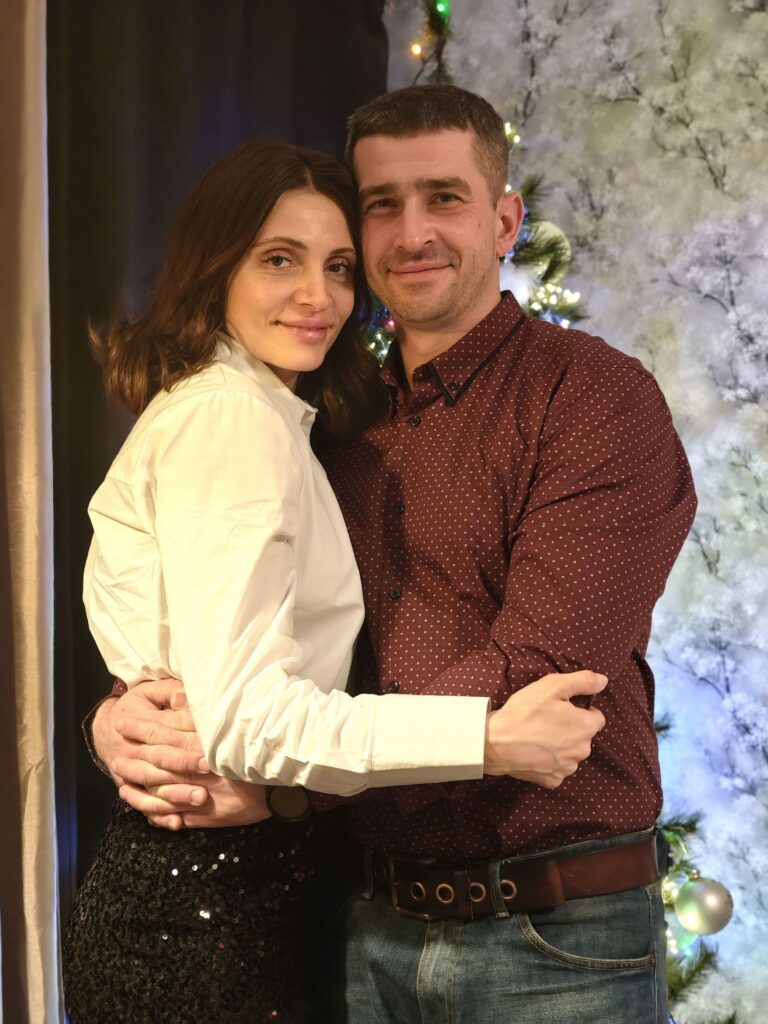
Meanwhile, Mila focused on growing the group.
“We started meeting at a café, because at the time my husband was working at the House of Culture nearby. Our supervisor, Indrek, suggested that if we needed a place, we could meet there as long as there were no events scheduled that day. It was free. And everything somehow flowed easily. Step by step, piece by piece and suddenly the whole structure came together.”
That was when she felt it: she was no longer standing still. She was useful. Being involved gave her the strength to live and to keep moving forward.
Everyday Help
“Sometimes I wouldn’t even notice how the day had passed. I was exhausted. At times I would leave my child at home and go to other children, bringing them things, driving them somewhere, showing them places.”
And it all came to an end just as simply as it started. At some point, Mila realized that her help was no longer urgently needed: many people had already settled in, adapted, found their footing. By then, she herself had begun working as a coach. The city had also introduced paid positions for volunteers in this field. She was disappointed to learn that she hadn’t been included but there was no time to dwell on it. Her days were full to the brim with life and responsibility: training sessions, friends who had come to Haapsalu, home, family.
“But even now, after all this time, if someone calls or asks for help, or needs a ride somewhere, I’ll do it. I just won’t make a point of talking about it.”
Fear and the Inability to Return to Ukraine
In nearly four years of war, Mila has not returned to Ukraine even once.
Her family home is in the Donetsk region, on territory that is now occupied. Reaching it is only possible through Russia, and for her, that is unsafe.
“I’m afraid to go there. If I even imagine that situation, my phone could be checked at the border, and because of my political views, I could simply end up in prison.”
No matter how strongly she longs for her native places, familiar streets, and old friends, she is not ready to take that risk. The reality of war is paralyzing and forces people to stay away, even from their own homes.
“I’m so afraid that just a few days ago, I think it was the day before yesterday, I dreamed about bombings. I’ve never seen them in real life, never experienced them myself, only on television. But the horror I woke up with… I often think that my fate, the path my life has taken, led me away from this for a reason. My psyche would not have endured it.”
To safeguard herself, she has set strict limits on following the news. She allows herself to check it no more than three times a week, choosing calm over constant exposure.
People and Support
Even in the midst of horror, a glimmer of goodness can be found. During that harsh time, she discovered “her” people here, in a foreign land—people who made her feel less alone.
But the most precious support was the strong shoulder of her husband, always nearby.
“My husband has always been there for me; he’s my anchor. Even when I wanted to give up everything and return to Ukraine…”
Over time, she began to feel support beyond her family, from people who at first seemed like strangers. From Estonians.
“And we know you’re from Ukraine, so we decided to come, to see, to train with you.”
At first, she led her sessions in English, but she soon noticed that most of the participants were Estonian. For them, she switched to their native language, both as a way to practice and as a gesture of respect for the country and its people.
“I would say, My name is Mila, I’m from Ukraine. I’ll try to speak Estonian with you, but I might make mistakes. Feel free to correct me, or we can laugh together. I made an effort to treat it with self-irony so I wouldn’t punish myself for mistakes.”
Instead understand that errors are part of the process.
Journeys and Settling In
“Well, first of all, when my husband and I came here to work back in 2019, it was autumn, and we thought we’d earn a little money and then return to Ukraine to buy an apartment. We’re both from the Donetsk region, and by that time, we didn’t really want to live there anymore.
Then our child was born in Kharkiv, and we realized we couldn’t spend our whole lives renting apartments. I had been working as a schoolteacher, and my husband as a chef in a coffee chain, yet even together, our income wasn’t enough to save for a home.
At first, we spent a year in Kazakhstan.
“I worked there at an international school. By degree, I’m a philologist and a teacher of Ukrainian language and literature, but in Kazakhstan I taught primary school. I started with the alphabet, how to read and write letters plus Russian, math, and something like natural sciences, though it’s organized a bit differently there: nature, anatomy, chemistry, physics—all in a playful, hands-on way. I also handled class activities, organized events, concerts, and children’s performances.
But it didn’t work out, primarily because of the climate. It wasn’t suitable for our child. Once we returned home, we realized that going back to Kazakhstan was simply not an option.”
From Financial Crisis to Relocation
In 2018, during the financial crisis, it had already become common for Ukrainians to look for work abroad. Mila’s husband was searching for high-paying jobs, but often encountered dishonest websites that demanded upfront payments.
Eventually, they met a responsible Estonian named Indrek, with whom they still work to this day.
“I followed him here, like the wife of a Decembrist,” Mila laughs. “I thought I’d find work in a school, but in 2019, the last Russian-language school in Haapsalu closed. I went from working in beautiful offices, wearing elegant dresses and skirts, to being a cook’s assistant. An entirely different environment, completely different conditions.”
Once they decided that the whole family would move to Estonia, Mila returned to Ukraine to bring her son. COVID-19 was already spreading outside. While waiting for her husband to arrange all the necessary documents, she began thinking ahead about how to help her son and herself adapt to life in a foreign country. Her teaching background proved invaluable.
Adapting Her Son and Learning the Language
“I bought a textbook for learning Estonian. He was still in first grade in Ukraine, and I studied with him at least five times a week, even though I didn’t know the language myself, except for Tere and Head aega. By the time we arrived in March, he was already reading, speaking, and understanding endings. He played on playgrounds with Estonian children and watched cartoons. By August, before first grade started, we hired a tutor.”
“I remember picking him up after his first lesson. The teacher came out and said: “Why did you bring him to me? He reads, counts, writes, and speaks. Just send him to school, and he’ll do just fine.””
“I remember picking him up after his first lesson. The teacher came out and said, ‘Why did you bring him to me? He reads, counts, writes, and speaks. Just send him to school, and he’ll do just fine.’”
“He spoke quickly and fluently, using words I didn’t understand at all. That’s when I realized I would have to study the language myself to be able to follow him and understand my own child.”
War and Life Choices
The war made one thing clear: returning to Ukraine was no longer an option. If you don’t want to work in a kitchen, then act. Develop skills, learn the language, work hard, and build your life. No complaints. Only results.
Switching from her familiar routine to a tedious kitchen job, Mila struggled to go to work. It was especially hard since she and her husband were working in different places. Creative and socially active, she knew she was far from where she belonged.
“I always had something going on, and then I come here, and by five or six in the evening the streets are empty, I don’t understand the language, I have no friends. I hated this job, but I also knew I’d already moved here, and I couldn’t just sit around doing nothing. Besides, the company didn’t forbid trying out different things during the day. And I, like a stressed-out hamster, started eating a lot and gaining weight. That’s when I decided I needed to start exercising.”
Sports and Coaching
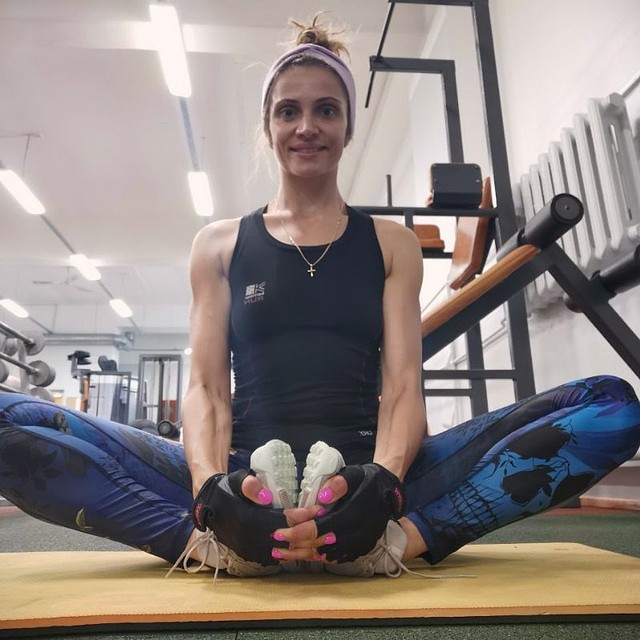
Mila walked into the gym with zero experience, but gradually she figured things out: by watching trainers’ videos and reading, she developed a conscious, thoughtful approach. It became clear that training was not just “moving your arms and legs,” but a comprehensive, structured process.
A friend from Ukraine, also going through a crisis, came to visit. Mila invited her to the gym, showing her exercises and explaining them with simple, clear commentary. That’s when her friend said:
“Listen, Milka, you explain things so well, you’d make a great trainer.”
Even then, Mila realized how much she enjoyed it, especially seeing tangible results.
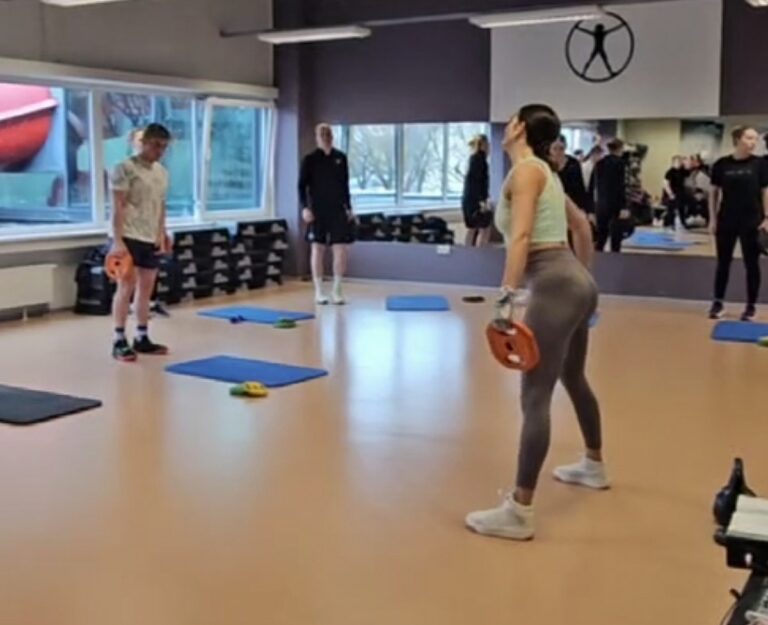
During a time of global isolation, she used her time wisely, learning and growing as a professional. She deliberately chose Ukrainian education, taking courses and rehabilitation programs at Ukrainian schools with European certifications. This approach allows her not only to design training programs, but to work individually with each client, understanding that there is no one-size-fits-all method.
Confronting Fear
“Then came the fear of starting. How would I do it? I offered free sessions, then thought about maybe organizing outdoor workouts. A million ideas, but I just couldn’t bring myself to begin. And in one conversation with my son’s swimming coach, I said, I’m a trainer too, but I just can’t start. I want to, but I’m scared.”
The coach spoke with the gym manager, and in just one evening everything changed: the fear disappeared, and Mila began leading group classes.
Gradually, through these sessions, Mila got to know Estonians. They saw her learning their language, and over time they started coming for personal training sessions as well.
Her Philosophy of Fitness
She always takes into account that people may have injuries or muscular imbalances, so she approaches training with care and attention.
Today, Mila leads Pilates sessions in a combined format: part of the workout focuses on strength exercises with weights, while another part consists of slow, mindful movements on mats set to music, emphasizing conscious breathing. Clients enjoy this approach. They engage actively and take real pleasure in the sessions.
“I want to say that if, back in that terrible, depressive state, I had gone to the gym, I don’t know how my life might have changed or what my health or appearance would be like now.”
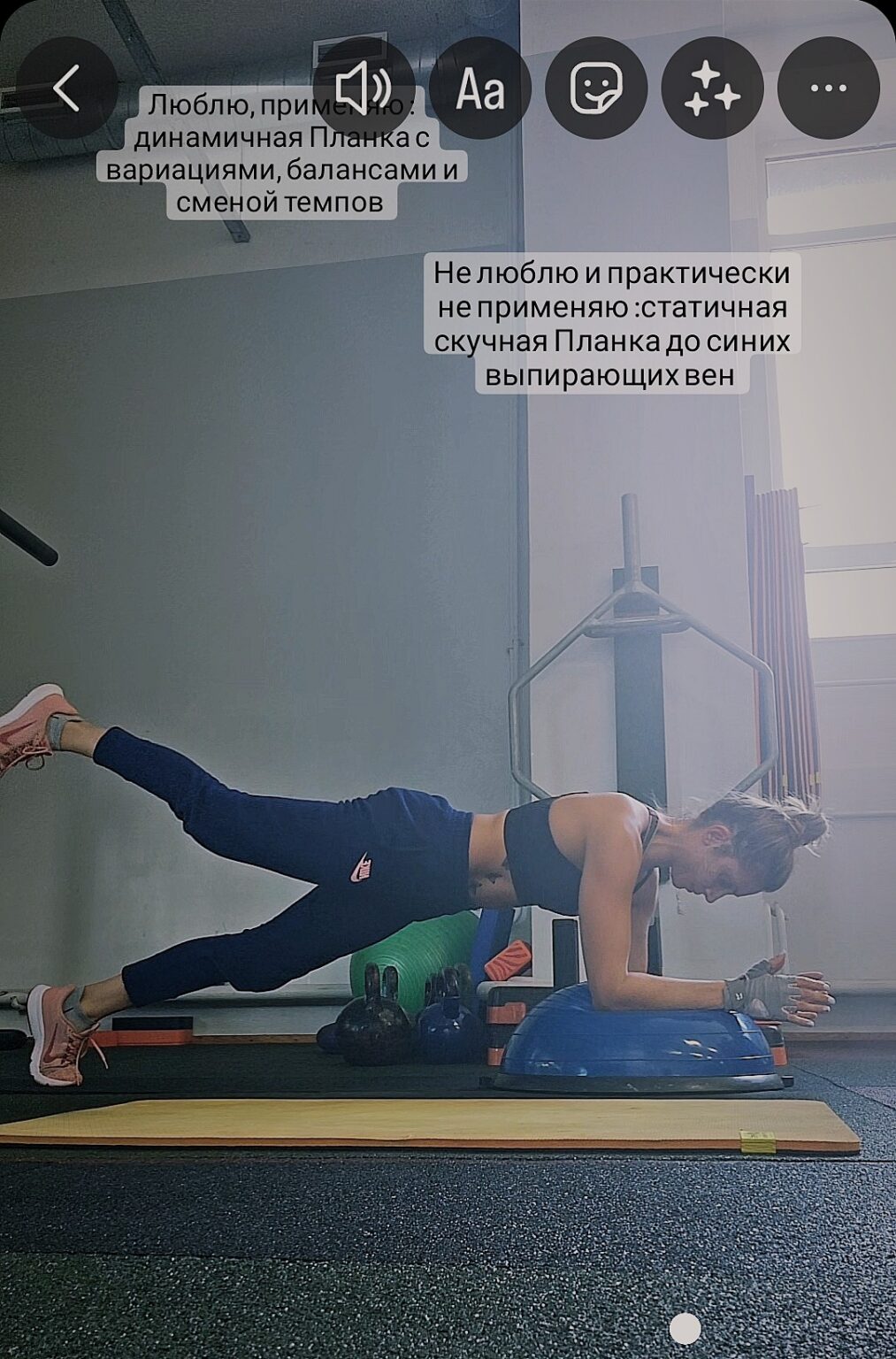
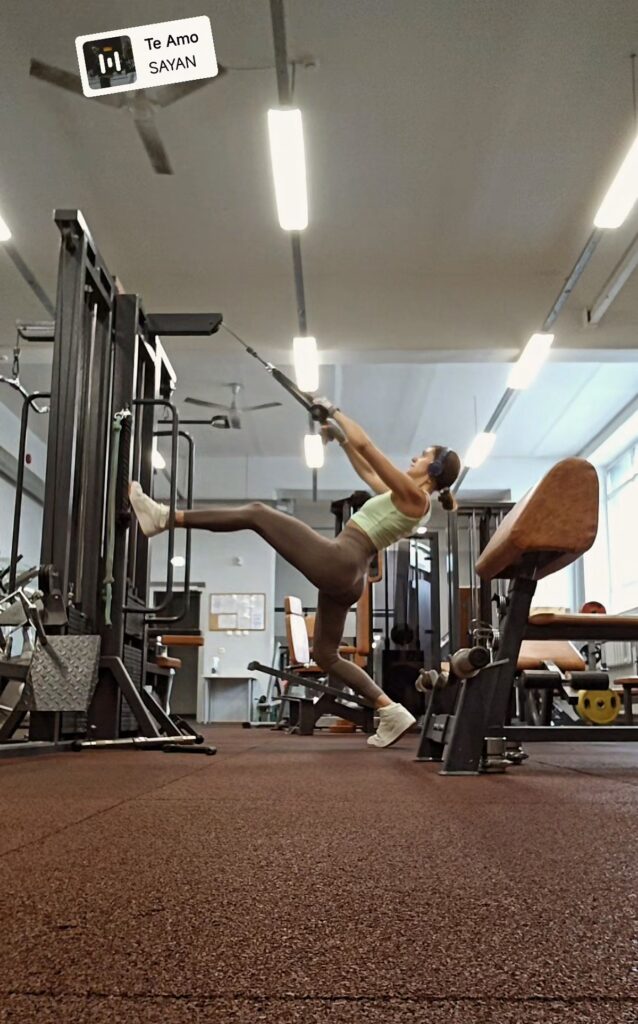
That’s why I always say that exercise, training, and consistency in practice can pull you out of almost any problem.
Life in Estonia and Family
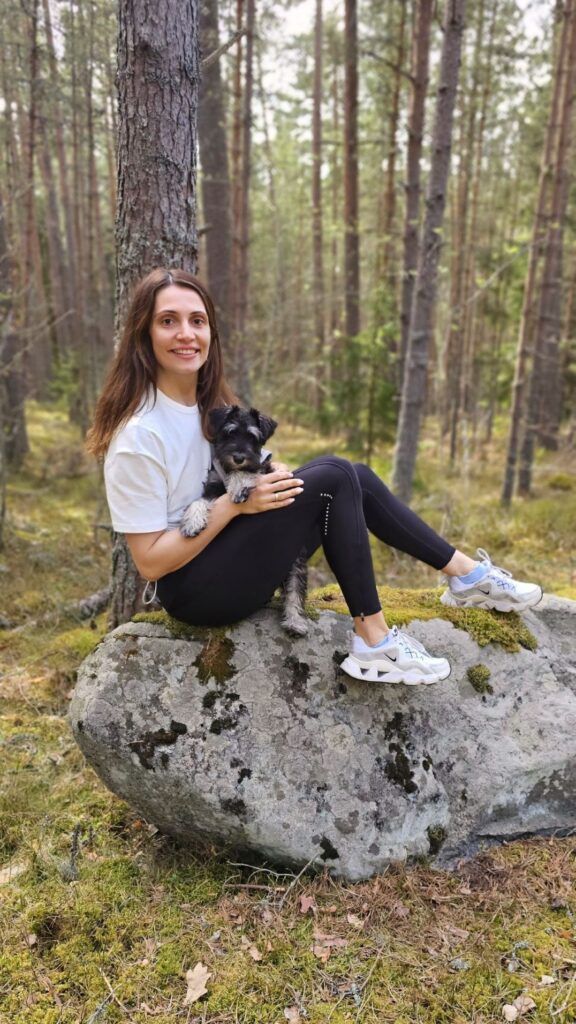
Settling in Estonia didn’t happen overnight. But now she knows that this is their home. Their fortress, complete with a small, fluffy guardian.
Mila had always thought she didn’t want pets, especially dogs.
“I actually always wanted one, but when I was little, my dad brought a dog home. She ruined the carpets, and my mom said, ‘It’s either me or the dog.’ And that was it. Until I was 33, I thought dogs just ruin carpets, and that was enough reason to avoid them. So for us, a dog was out of the question.”
But her husband’s 35th birthday was approaching, and he made a wish. She resisted for a long time, but eventually gave in and has never regretted it since.
“When this little miracle came home, first of all, harmony arrived. Now we have two boys and two girls in the family. And secondly, she’s just ours. It’s impossible not to love her. I kiss her, hug her, and she mostly sleeps with me.”
Now they have everything one could dream of: a loving family and a place they are happy to call home.
“When we realized we had arrived at an apartment from which no one could ever evict us, and that we were the owners here, a special sense of nesting came over us.”
Personal Philosophy and Confidence
“I turned 35 this January. I no longer want to depend on anyone, compromise with conditions I don’t like, or base my career or relationships on other people’s opinions. If you have a desire, you find a way to make it happen yourself. To get what you want, you have to act, work hard, and not expect anyone to hand it to you.”
Mila is grateful to Estonia and notices how much it has changed her:
“I’ve become more restrained because before I could easily get into conflicts. Now I understand the Estonian mentality. Here it’s not acceptable to act impulsively or behave rudely.
I’ve also become much more attentive to cleanliness thanks to Estonia. Even when I flew back to Ukraine, I noticed how dirty the streets had become.”
Some people think Estonians are cold. I think they’re not obligated to warm anyone up!
Her philosophy: no one owes anyone anything.
The Last Trip to Ukraine
The last time she flew to Ukraine was in August 2021. Her heart ached with a deep, painful longing for home, as if she instinctively knew this farewell would be a long one.
Upon returning, she cried and told her husband she wanted to leave everything behind and go back. He remained firm and calm, so she stayed. In February 2022, with bitter clarity, she realized that decision had saved her.
Sometimes the thought of moving to another country still creeps in, especially after short trips to warm, carefree places. But in her family, these discussions find no echo. For her husband and son, their lives are already rooted here, and they aren’t willing to change that.
Home, Comfort, and Holidays
Starting life from scratch isn’t easy. Yet here, Mila feels truly herself. Returning from other countries always brings the same quiet warmth: “I’m home.”
She happily shares small observations about Estonia with new acquaintances:
“There are no homeless people on the streets, no piles of trash, no drugs offered like in Brussels.”

For a young family, such small, safe towns are ideal. Sometimes she closes her eyes and imagines growing old here, sitting at home and gazing at the sea, with sunlight streaming through the windows.
Now their home holds a small celebration: a Christmas tree decorated by Mila and her husband, alongside their faithful companion of 18 years. They always celebrate New Year quietly, just the three of them:
“The most important thing is being together. We can dance, watch the Estonian and Ukrainian presidents’ speeches, or even step outside for fireworks, but no guests and no noise. Just family.”
Mila rarely cooks, but when she does, Ukrainian borscht might appear on the table. She also enjoys Estonian specialties such as pork knuckle, blood sausage, kilu leib (sprat on rye brea), and even the bread.
She has built her life here, keeping her love for Ukraine in her heart while learning to cherish the present and create her own cozy world. Family, home, work, and friends. What once seemed impossible is now part of her stable, mindful life.
Even far from her homeland, she knows one truth: home is where you create warmth, care, and love yourself.
Mila’s Training Sessions in Haapsalu
Today Mila leads Pilates sessions in Haapsalu. If your back feels stiff or your mind is full of thoughts, Pilates may be exactly what you need. You will leave the session with better posture, a stronger body, and a refreshed mind. You are warmly welcome to join.
View training detailsRead more personal stories
People living in Haapsalu share stories of new beginnings, community, and life in Estonia.
Explore the stories →